The Most Important Part of Your Podcast Has Nothing to Do With Technology
It's an exciting time to be a podcaster. When I think of what 2027 will bring, I could choose to be scared, but I instead choose to be excited.
Technology continues to evolve at a remarkable pace. We have AI helping us edit, write show notes, create promotional materials, and even generate content (not my favorite use). We have better microphones, easier recording platforms, video podcasting, automated editing, and more ways to distribute our shows than ever before.
And there's nothing wrong with enjoying these new tools. In fact, many of them can help us create better shows while spending less time on the technical side of things. Nobody revolted when the electric screwdriver was invented (and later the battery powered screwdriver)
But every once in a while, it's worth stepping back and asking a very basic question:
What is the core function of podcasting?
At its heart, a podcast should do something for the person listening.
It should make them laugh. It might make them cry. It should make them think, challenge an assumption, or occasionally make them groan at a terrible joke.
It might save them time by explaining something complicated. It might save them money by helping them avoid an expensive mistake. It might teach them a new skill, introduce them to a new idea, or help them see the world a little differently.
Or maybe it's simply an entertaining 30 minutes that makes their commute a little more enjoyable.
All of those are legitimate reasons to listen to a podcast.
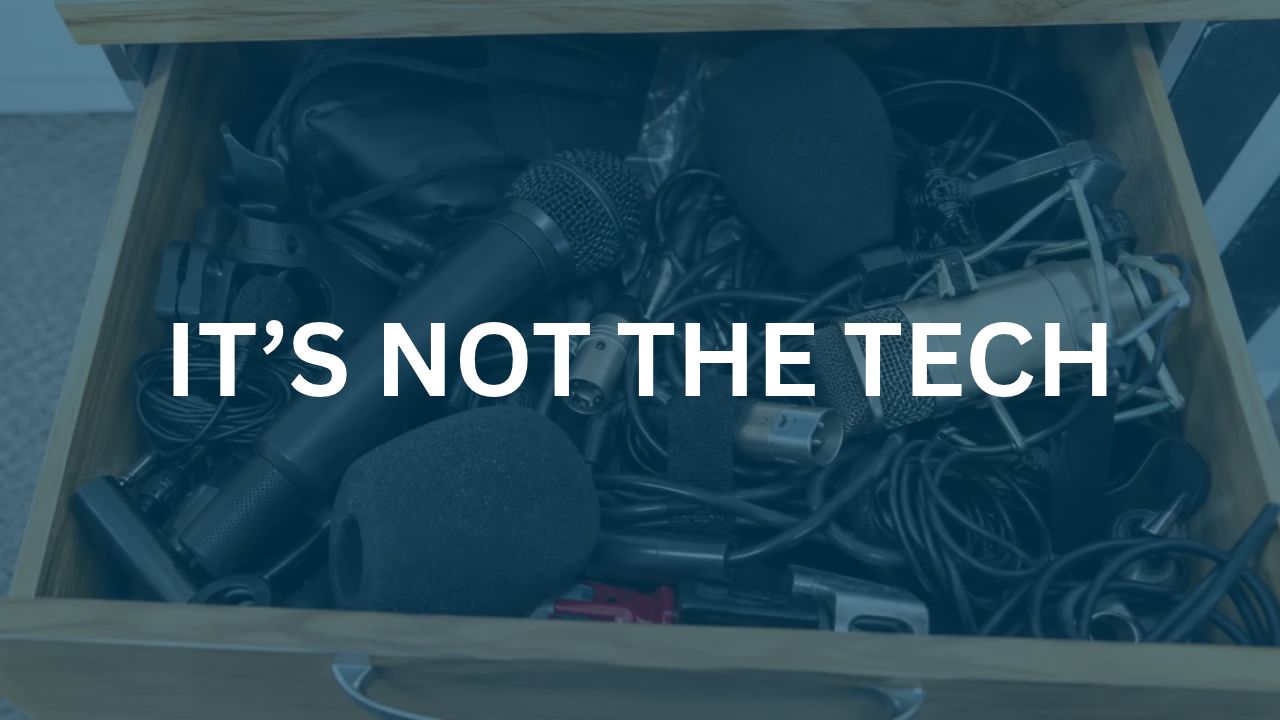
Notice something? None of those benefits have anything to do with the microphone you used, the editing software you purchased, or whether you recorded in a professional studio or your spare bedroom.
They have everything to do with the listener.
Technology Is the Tool, Not the Purpose
As podcasters, it's natural to get excited about new technology. We enjoy experimenting, discovering shortcuts, and finding ways to improve our production.
But it's important to remember that technology is a means to an end, not the end itself.
A better microphone can improve the listening experience. AI might save you hours of editing time. Video can help introduce your show to a new audience. A great website on Podpage can make it easier for people to discover your podcast, learn about you, and decide to follow your show.
Those are all good things.
But technology is only valuable when it helps us deliver something our audience wants.
Nobody subscribes to a podcast because the host uses the latest transcription software or has the most expensive microphone. They subscribe because they enjoy the content, connect with the host, and want more of that experience.
It's easy to spend hours researching equipment, testing software, and tweaking settings. Just make sure you're spending enough time thinking about the person on the other end of those headphones.
Consistency Is About More Than Your Publishing Schedule
Here's where I think experienced podcasters need to pay particular attention.
It's one thing to create a great episode. It's another thing to consistently deliver the kind of experience that makes someone want to come back.
We talk a lot about consistency in podcasting.
Publish every week. Stick to your schedule. Don't disappear for three months without telling your audience. This helps you gain a spot in the listener's routine.
That's all good advice. But there's another kind of consistency that's arguably even more important:
Consistency in the value you deliver.
Your audience develops expectations. They know what kind of information, entertainment, perspective, or personality they're going to get when they see a new episode from you.
That expectation is part of your show's promise.
If your podcast helps people save money, keep helping them save money. If you make people laugh, keep giving them reasons to laugh. If you teach people how to do something, keep helping them become better at it.
You don't have to make every episode identical. In fact, variety can keep a show interesting. But the underlying value should remain recognizable.
Think about your favorite restaurant. You might try something different from the menu each time you visit, but you still expect the food and experience to meet a certain standard.
Your podcast is no different.
Consistency isn't just about showing up. It's about giving people a reason to be glad you showed up.
Publishing every Tuesday is a production habit. Delivering something worthwhile every Tuesday is an audience-building habit.
That's how you build trust. And trust is what turns an occasional listener into a loyal audience member.
A Simple Challenge for Your Next Episode
Before you record your next episode, take a minute and finish this sentence:
"After listening to this episode, my audience will be able to __________."
Maybe they'll understand something they didn't understand before. Maybe they'll know how to solve a problem, avoid a mistake, or make a better decision.
Maybe they'll have a new perspective on something. Or maybe they'll simply have a better day because you made them laugh.
There isn't one right answer. Your podcast doesn't have to teach something in every episode. Entertainment, companionship, inspiration, and a fresh perspective are valuable, too.
But if you struggle to finish that sentence, it might be worth spending a little more time thinking about the content before you hit record.
If you're not so much a "how to," maybe your sentence is
"After listening to this episode, my audience will feel__________."
Try looking at your episode from the listener's perspective instead of the creator's perspective.
There's a big difference between saying, "I have something I want to talk about" and saying, "Here's something that will be worthwhile for you to hear."
That small shift in thinking can make a big difference in the quality of your content.
Don't Lose Sight of the Listener
Podcasting will continue to change. We'll have new tools, new platforms, new distribution methods, and opportunities we haven't even imagined yet.
That's part of what makes this medium so exciting.
But the fundamentals aren't changing.
People listen because they want something. They want to learn, laugh, feel something, be challenged, save time, save money, or simply be entertained while they're driving, walking the dog, working out, or doing the dishes.
Our job as podcasters is to understand what that something is and deliver it consistently.
So go ahead and enjoy the new technology. Experiment with AI. Try video. Upgrade your microphone if you need to.
Just don't let the process of making a podcast become more important than the reason you're making it.
And remember, your podcast website is another opportunity to reinforce that promise. When someone discovers your show, make it easy for them to understand what you offer, who your podcast is for, and why they should spend their time listening.
Your audience doesn't care how difficult it was to produce your podcast. They care whether it was worth their time to listen.
At the School of Podcasting we offer "Listener Parties" where you watch us listen to your show. This way you can tell if we are laughing when we're supposed to laugh. I'd love to see what we could do together to grow your audience.

I've been podcasting since April of 2005. My podcast about podcasting has been downloaded over 3.1 million times (as of 2022). I've helped hundreds of people launch podcasts. Before podcasting, I used my degree in education (specializing in technical education) to harness the power of hardware and software (going back to fax machines and this new thing called e-mail and the Internet).
To hear what my client say, please visit my testimonial page.
How Dave is Different
Unlike many other “geeks” who know how to podcast, I've been a technical trainer for over 20 years. This means not only do I understand the technology but I can explain it in a plain English “geek-speak free” environment. I have a Bachelor's Degree in Education from the University of Akron (Specializing in technical education). While there are other podcast consultants, I believe my experience sets me apart in regards to helping you make sense of the entire podcasting process. I not only help with the “how,” but I also help explain the why, and make sure you avoid the common podcasting pitfalls. I have won awards at fortune 500 companies for my customer service. In a nutshell, I care.
I am one of the top podcast consultants, and I have spoken at many marketing and media conventions including New Media Expo, Blog World, Erma Bombeck Writing Workshops, Podcamp Columbus, Podcamp Cleveland, Podcamp Cincinnati, and the Business of Writing Summit. I am the author of the book Profit From Your Podcast.
In 2014 I was named the Director of Podcasting for t… Read More
Why Most Podcasts Fail (And How Yours Won't)


 Podurama
 iHeartRadio
 Goodpods
 Podcast Addict
 Amazon Music
 Castamatic
 Youtube Music
 Podverse
 Fountain