
 Apple Podcasts
 Spotify
 PocketCasts
 Overcast
  Podurama
  iHeartRadio
  Goodpods
  Podcast Addict
  Amazon Music
  Castamatic
  Youtube Music
  Podverse
  Fountain
 Inside “Horses in the Morning”: Daily Content, Loyal Fans, and 4000+ Episodes
How Do You Hit 4000 Episodes Without Losing Your Mind?
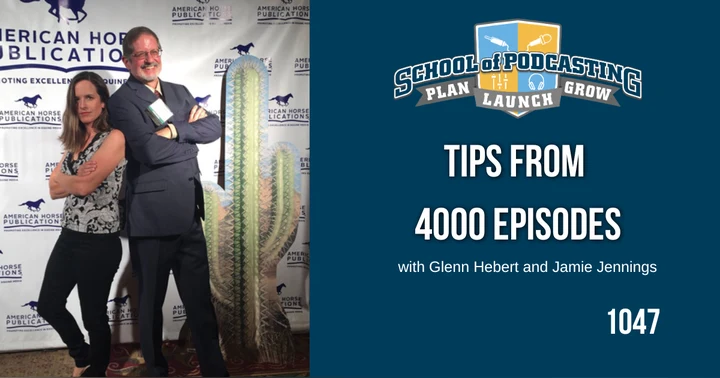
Today I'm talking with Glenn Hebert and Jamie Jennings from Horses in the Morning, the flagship show of the Horse Radio Network. They just crossed 4000 episodes, and since they're doing this daily, I had a ton of questions for them. Mainly: how do you keep your sanity?
Glenn has been on this show more times than any other guest, and I'll drop links to a few of those past conversations below. We also talk about how "Glenn the Geek" became a verb around here. I cut in a few times throughout the episode to riff on some of what we discussed, so stick around for that too.
Key Takeaways
- Segments (not just guests) are what let a daily or frequent show survive without constantly reinventing the wheel.
- A real community needs a place to talk to each other, not just a place to listen to you.
- Feedback from your most invested listeners (not just anyone) should shape what you keep and what you cut.
- You're making the show for the 80% who like it, not the 20% who don't.
- If you're trying to make money at this, budget 10-12 hours of work for every hour that airs.
How Glenn and Jamie Keep Finding Something to Talk About
Jamie's husband asked her, before episode one, what she was even going to talk about after two weeks of a horse podcast. Sixteen years and 4000 episodes later, that question still makes her laugh. Glenn books guests only a week or two out, and most of the show's four or five segments per episode get planned the morning of. Being daily is actually their advantage: they can be timely in a way most podcasts can't.
Glenn admitted he basically is the show-prep service. Google Alerts and AI help him find stories faster than they used to, but the instinct for what's worth talking about still comes down to two to three hours of prep every single morning.
Segments Give You Somewhere to Put Your Energy
Jamie is the storyteller. Glenn plays the guy reacting to it. He described their pre-show routine: Jamie says she's got a two-to-five-minute story, and he already knows it's going to stretch to twenty minutes and he'll happily let it. That contrast, he said, is what makes the show work.
I've got segments on this show too (if you've got a favorite segment idea, feel free to send it in). One of mine is built entirely out of "this happened because I have a podcast." I used to do a "last five in five" segment where I'd share the last five things I listened to in under five minutes. Segments are useful because they don't all have to show up in every episode. When I don't have a big topic, I create a "podcast stew," a handful of small segments squeezed together. Takes the pressure off having to fill a big block of time. An episode just needs to be as long as it needs to be, and not a minute more.
Building a Community That Actually Talks to Each Other
Glenn says their community basically built itself once Patreon entered the picture around nine or ten years ago. One of their own listeners asked if she could start a private Facebook group for supporters, and it's grown into 30+ subgroups on everything from dogs to mental health, plus in-person meetups they run themselves.
Glenn's take, and I completely agree: the biggest mistake podcasters make when they say they want "community" is giving people no actual place to talk to each other. A community needs a room. You don't have a true community until they can talk to each other.
They get supporters directly involved too, birthdays shouted out on air, segment material submitted by listeners themselves. If your audience made the content, you already know they're going to like it.
Sponsors Who Become Part of the Family
Jamie and Glenn have given away more than $80,000 in prizes over 16 years, largely funded by sponsors who get a bit of airtime in exchange for product. Those relationships often graduate into full paid sponsorships once the brand sees it works.
That reminded me of Mark from Beyond Bourbon Street, a past guest of mine (episode 829) who had Two Chicks Walking Tours as a sponsor, then had listeners telling him in his own community that they'd taken the tour and loved it. That's the kind of proof that makes a sponsorship renewal conversation easy. And speaking of sponsors sticking around, I was listening to The New Media Show recently and they mentioned Todd Cochran had GoDaddy as a sponsor for around 21 years.
The Focus Group Most Podcasts Never Bother With
This one floored me. On top of their broader Patreon community, Glenn and Jamie run a rotating focus group of 12 listeners every six months whose entire job is to comment on every single episode. Every episode gets six to twelve honest responses.
That feedback has actually killed segments. They ran an "animal psychics" bit for a while that they personally enjoyed, but the negative response outweighed the positive, so it's gone. If you're going to ask your paying supporters for their opinion, you have to actually be willing to act on it.
Handling the People Who Don't Like You
Glenn's rule, learned from ten years running an improv theater company: about 80% of any audience likes what you do, and 20% doesn't. That ratio doesn't change. You're not making the show for the 20%. You're making it for the 80%, and Glenn pointed out the harder truth: a chunk of that 20% keeps listening anyway, seemingly just to be annoyed. Let it go.
Jamie added that after the true fans and the negative Nellies, there's a middle group whose feedback is the most useful because it's the most honest.
The Most Popular Segment Isn't the Guests
Right before hitting 4000 episodes, they surveyed listeners on favorite segments. The winner, by a wide margin: pure host banter, just Glenn and Jamie talking about nothing. Their biggest listener complaint over the years has actually been "too many guests." As Glenn put it, people come for the content and stay for the hosts.
What It Takes to Actually Make Money Doing This
Glenn's advice for a new podcaster wondering when the money shows up: niches make it easier. Horse people, in his words, are some of the most dedicated hobbyists out there, and that's true of plenty of other niches too (cycling, golf, you name it). Small and mid-sized brands without their own ad agencies are the sweet spot, and Glenn's found 80% of his sponsors by showing up in person at trade shows and introducing himself at every booth. He's been to 38 of them.
Their own listener survey backs this up: 80% of listeners said they'd bought a product because Glenn and Jamie talked about it on air in the last year. Only 25% said the same about a banner ad. Trust is the entire business model.
Doing the Show Sick, and Other Real-Talk Moments
When you're sick, you address it up front. Ignoring it doesn't work, because that's all the listener will focus on anyway. Same goes for a loud remote recording location. Be real about it and people roll with it, sometimes they even prefer it.
One detail that stuck with me: Jamie trains off-the-track thoroughbreds and has personally placed horses with listeners in 18 different states just by mentioning them on the show. That's community turned into real-world impact.
My Takeaways After the Interview
A few things I wanted to add once the mic was off:
Contact info matters more than you think. Always tell people how to reach you. For me that's schoolofpodcasting.com/contact. Someone recently told me they'd left a comment on my Substack and had no idea if I'd seen it, because I hadn't told them how I check for those.
Where to find ideas, beyond hanging out with your audience the way Glenn does: Google Alerts will tell you anytime a topic (or your name) gets mentioned online. Answer the Public shows you what people are actually typing into search around a topic. Or just Google your topic and scroll down to "People Also Ask."
On Podcast Movement: I wasn't selected to speak this year, which is the first time that's happened after speaking at every single one. Disappointing, sure, but I'll still be there to say hi, and I'll have more free time than usual. I am speaking at the Empowered Podcasting Conference in Charlotte, NC, and at PodIndy in November.
Lesson learned: if a voting campaign like this comes around again, I'm rallying the troops early instead of assuming people will remember on their own.
On working with AI: I'm deep into learning Claude and all the "co-worky" automation stuff right now, and I'll be the first to admit I don't know what I don't know. I've been leaning on School of Podcasting members who are further along with it, including Craig from AI Goes to College and John Jamingo from Boomer Bunker.
If you're not doing audience surveys, that's its own version of not knowing what you don't know, and if you're not sure whether your audience is engaged, their silence on a survey is usually the answer.
Glenn's Past Appearances on the Show
- Making a Living Talking About Horses
- Learn How You Can Help Others by Sharing Your Abilities with Glenn Hebert
Take Live Classes at the School of Podcasting
Starting August 19th, we're running two live classes. Podcasting in Six Weeks is back, and it's free this time, for anyone who hasn't launched a show yet: schoolofpodcasting.com/sixweeks. And for members, we're running a live Growing Your Audience course together, tracking your download numbers before and after: schoolofpodcasting.com/growcourse. Use the coupon code listener when you sign up for a monthly, quarterly, or yearly School of Podcasting membership.
Question of the Month
What's the smallest audience size you'd still do your show for? Would you quit if it dropped below that, or dig in to find out why? Send your answer to schoolofpodcasting.com/question by August 28th, and include your show name and website so I can link to you in the notes.
I'm Dave Jackson. I help podcasters. It's what I do.
Until next week, take care, God bless.
Class is dismissed.
Research Links
- AnswerThePublic by Neil Patel: Keyword Research & Content Ideas
- Google Alerts - Monitor the Web for interesting new content
- How a Travel Podcast Survived Covid with Mark Bologna - Beyond Bourbon Street
Mentioned in this episode:
Take Live Classes at the School of Podcasting
Podcasting in Six Weeks is BACK! (and this time it's free!) We are continuing to experiment with marketing, and we had so much fun helping people launch their show that we are going it again (and dropped the fee). If you don't have a show but want to start one this is THE place to get going in the right direction. Go to www.schoolofpodcasting.com/sixweeks Growing Your Podcast Live Course For members of the School of Podcasting we are all banding together to go through the steps of growing your show (so sign up now!). This will including feedback and strategies to get your show growing faster. You will write down your typical downloads before you start, and compare it to the final numbers. Use the coupon code listener when singing up to become a member and receive a discount. These live classes start August 19th. Please let me know if you have any questions at schoolofpodcasting.com/contact
Live Appearances
I love to meet people when I'm on the road. I'm going to be at Empowered Podcasting Conference in Charlotte NC Podcast Movement in NYC Podindy in Indianapolis In. For more information and links, go to schoolofpodcasting.com/where To have me speak at your event, reach out at schoolofpodcasting.com/contacnt
Question of the Month: The Smallest Amount of Downloads
We all want a bigger audience. We all put a lot of work into our shows. With this in mind, what is the smallest amount of downloads you would do the show for? If it drops below a number would you stop, or put effort into finding out why? Does the size of your audience matter? Go to schoolofpodcasting.com/question by August 28th (and don't forget to say a little bit about your show and your website address so I can link to it in the notes)
Podpage Email Alerts
Podpage just launched a feature called Episode Alerts. It automatically emails your subscribers the moment a new episode goes live — no third-party email tool needed. When you publish, Podpage sends the email, links listeners straight to the episode, routes replies to your own inbox, and handles unsubscribes automatically. They also run every email address through validation and monitor bounces/spam complaints to protect your sender reputation. It's not meant to replace a full newsletter platform — no drip campaigns or segmentation — just a simple "hey, new episode's up" notification. It's available for Pro and Elite users, with monthly sending caps of 500 emails on Pro and 5,000 on Elite. For more information see https://www.podpage.com/updates/introducing-episode-alerts/
Free Podcast Tips
00:00 - Untitled
04:52 - Jamie's Role
05:46 - Glenn's Role
06:45 - Story Teller Role
07:33 - How Did Your Not Kill Each Other?
08:19 - Building Their Community
12:09 - Content Creation on the Radio
14:10 - Feedback
15:55 - Dealing with Criticism
17:42 - If the Show Was Over Tomorrow
20:09 - Radio Vs Podcasting
21:49 - Advice for New Podcasters
22:57 - Putting in the Work
24:37 - Monetization Tips
26:56 - Glenn is a Verb
29:18 - Marker 26
30:34 - HRN Stats
31:43 - Doing a Show Sick
32:21 - Obvious Trust of Hosts
33:38 - Congrats on Award
34:11 - Tips From the Talk
37:39 - Harvesting Ideas
39:08 - Thanks for the Votes
40:54 - You Don't Know What You Don't Know
43:23 - Bloopers
Speaker:
The SOP Singers: The School of Podcasting with Dave Jackson.
David Jackson:
Podcasting since 2005. I am your award-winning
David Jackson:
Hall of Fame podcast coach, Dave Jackson. Thanking you so very,
David Jackson:
very much for tuning in. If you're new to the show, this is
David Jackson:
why I help you plan, launch, grow, and if you want to
David Jackson:
monetize your show today, we're talking with Glenn and Jamie
David Jackson:
from Horses in the Morning. They just went over 4000 episodes,
David Jackson:
and there are a lot of questions that I wanted to pick their
David Jackson:
brain. Mainly, how do you keep your sanity? Holy cow! Now it's
David Jackson:
a daily show, so it's easier to get to 4000 than if you're
David Jackson:
doing, say, a weekly or you know every two weeks. But I wanted to
David Jackson:
bring him on. Why? Because Glenn has been on this show more than
David Jackson:
anybody, and I'll have links to some of his episodes. We're
David Jackson:
going to talk about how Glenn became a verb at the School of
David Jackson:
Podcasting a little later, and I am going to cut in every now and
David Jackson:
then to talk about some of the topics that we talked about.
David Jackson:
That at the time I go, oh, I should have brought this up. So
David Jackson:
with that, here is my discussion with Glenn and Jamie from Horses
David Jackson:
in the Morning. If you want to check it out, their podcast is
David Jackson:
on the Horse Radio Network, which you can
David Jackson:
find@horseradionetwork.com.
David Jackson:
Holy cow, Glenn and Jamie from Horses in the Morning. Welcome
David Jackson:
to the show. Thank you, Dave. Thank you for having us. So I'm
David Jackson:
just going to go where everybody is going to want to go, and that
David Jackson:
is okay. You're on episode I don't know 2138. How do you come
David Jackson:
up with something else? Like, how do you guys come up with
David Jackson:
topics?
Glenn Hebert:
Let Jamie tell you what her husband asked at the
Glenn Hebert:
very beginning of all of this. Yeah, I got hired for the show.
Glenn Hebert:
I did regular terrestrial radio, and then I got hired to do this.
Glenn Hebert:
And my husband said, "You're doing a show about horses.
Jamie Jennings:
What are you going to talk about after two
Jamie Jennings:
weeks?
Unknown:
I am so stubborn that I will prove him wrong no matter
Unknown:
what. So here we are, you know, 16 years into this. I mean, my
Unknown:
gosh, like that is a that's a radio gig that you just dream
Unknown:
about, you know.
David Jackson:
That's crazy. So, like for tomorrow's show, do you
David Jackson:
already know what you're talking about? Like, how far in advance
David Jackson:
do you plan?
Unknown:
I'm only booking guests about a week out, a week to two
Unknown:
weeks out, so a week to two weeks. So that's just the
Unknown:
guests. Our show is made up of four or five different segments
Unknown:
in each hour episode. So those segments I may only plan that
Unknown:
morning, and and it's topical because we are daily. The
Unknown:
advantage that we have over other podcasts is we can be very
Unknown:
timely with news, right? And that's one of the things Jamie
Unknown:
and I like about it. You know, she came from terrestrial radio,
Unknown:
so she was used to that. But we always designed it that we were
Unknown:
live for 10 years, blog talk radio. We had the bad sound of
Unknown:
blog talk radio for a long time. We gave that up, and we got real
Unknown:
sound eventually. But yeah, so it we do plan a little bit
Unknown:
ahead, but not too far.
David Jackson:
I know in radio, there's like show prep services
David Jackson:
where you subscribe, and it's like, okay, here are the type
David Jackson:
five stories. You know, how does that how does that work?
Unknown:
I'm show prep service. I'm the show prep service.
David Jackson:
Okay,
Unknown:
we have Google alerts and all that stuff, and of
Unknown:
course, AI helps us a lot now, finding stories and doing that
Unknown:
kind of thing. It at least helps us locate it, makes things a
Unknown:
little easier than it was five years ago.
David Jackson:
So I'm going to elaborate on what the heck is a
David Jackson:
Google alert and other places you can find ideas for your show
David Jackson:
a little later?
Unknown:
I probably work two to three hours on in the morning on
Unknown:
every episode, just doing show prep and trying to figure out
Unknown:
what we want to talk about. We do have certain segments that
Unknown:
are very popular that we do every week, so that helps. And
Unknown:
we have certain guests that we bring back on a regular basis.
Unknown:
As you know, listeners love having regular guests on the
Unknown:
show. They become invested in them too, so we do that as well.
Unknown:
I don't do it, I David. I just I have people.
David Jackson:
There you go.
Unknown:
I admit owner people.
Unknown:
No, the the segments that I take charge of, I work very hard to.
Unknown:
There's certain days that I know I have more work to do to to
Unknown:
prep, but like on Fridays, I sit down. Glenn's done it all. It's
Unknown:
awesome.
Unknown:
But I'll tell you what Jamie brings is life. She brings the
Unknown:
stories because she's actively working with horses where I'm
Unknown:
not, so she's actively working with what five to 10 horses a
Unknown:
day. So that creates a lot of stories, and you know, I always
Unknown:
said, you know, Jamie is a perfect host because we'll do a
Unknown:
pre-show meeting. Dave, you're going to so love this. We do a
Unknown:
pre-show meeting, and I say we, I said, you know, we have this
Unknown:
two to five minute spot, and. I know, and Jamie, guy, I got a
Unknown:
two to five minute story, and I know she's good for 20 minutes
Unknown:
on that two to five minute story. I know we can fill the
Unknown:
whole segment with just that two minute story will be 20 minutes,
Unknown:
and you'll be sitting at the edge of your seat. But that's
Unknown:
what makes a good storyteller, right?
David Jackson:
So Glenn has deemed you the storyteller part
David Jackson:
of the, you know, the gang here. What is Glenn's role then?
Unknown:
All I try to do is make him laugh. Like I love making
Unknown:
Glenn laugh because sometimes when he's like not paying
Unknown:
attention, I can tell because I'm like I just said something
Unknown:
funny and you didn't do anything. But Glenn's role is
Unknown:
to. It's crazy because I've worked with so many people in
Unknown:
radio and to to get along, like we have nothing in common. Glenn
Unknown:
and I have zero in common. We are just completely different
Unknown:
humans. We like different things. We we kind of like joke
Unknown:
about how different we are. So I think what happens when I tell a
Unknown:
story is he's kind of the opposite side. He's kind of the
Unknown:
levity of it because it's just sometimes so foreign to him. And
Unknown:
I still, after 16 years, can surprise him with nonsense. And
Unknown:
I think that
Unknown:
that's true. The
Unknown:
storyteller role and and the the storyteller entertainer role in
Unknown:
any any aspect of your life, be it your job, be it your podcast,
Unknown:
your whatever you're doing, your social media, you have to be
Unknown:
authentic. You have to be real. You have to be passionate. You
Unknown:
know, there's enough negative stuff in the world too. Like,
Unknown:
find a reason to be positive and happy and engaging, and you
Unknown:
know, people are drawn to warmth, and I think what Glenn
Unknown:
provides is like a warmer type reaction to what I am saying.
Unknown:
And and what I do, I am just, I'm overly honest, and sometimes
Unknown:
it freaks him out. I think, which makes me happier. But
Unknown:
I have the edit button, Dave. So
David Jackson:
you know, 4000 episodes, 16 years. How do you
David Jackson:
end up not killing each other?
Unknown:
We live way far. Way far
Unknown:
apart. We're not in the same room. So
Unknown:
I'm in Oklahoma. He's in Florida. Which again, it's just
Unknown:
so like I think we've probably in 16 years, probably seen each
Unknown:
other in person 10 times.
Unknown:
Maybe 10. Yeah, maybe
Unknown:
10.
David Jackson:
Do you do you talk during the week, or is it
David Jackson:
only right before the show? No, that's kind
Unknown:
of a rule we have. If one of the other is calling,
Unknown:
it's about something bad, and you don't want to answer the
Unknown:
phone because something bad has happened. You know, every time
Unknown:
she calls me, if I if I see the phone ringing. I'm like, oh
Unknown:
crap! What happened?
Unknown:
It's not always bad, but yeah, we don't we save it to the air.
Unknown:
Yeah.
David Jackson:
Well, the other thing that has enabled you to
David Jackson:
keep going is, you know, people are actually listening, and you
David Jackson:
have this amazing community. So, talk a little bit about how you
David Jackson:
build the community.
Unknown:
I think the community, in a way, kind of built itself,
Unknown:
and but it was because we include them in so many things.
Unknown:
We it especially started working when Patreon came about. I don't
Unknown:
know how many years, 910, years ago that is now. We were one of
Unknown:
the first horse ones on Patreon, and we developed a community
Unknown:
through that. It was actually one of our listeners who became
Unknown:
a Patreon supporter who said we need our own Facebook room. Do
Unknown:
you mind if I start one? And they started their their own
Unknown:
private Facebook group, and we've taken it ever since. But
Unknown:
they have their own place to hang out. I think one of the
Unknown:
biggest mistakes you've heard me speak on this, Dave, that
Unknown:
podcasters make is they want to build a community, but they give
Unknown:
them no place to hang out together, no place to talk. If
Unknown:
you want a community, they have to have a way to talk to each
Unknown:
other. That's what makes it a community. So we provided our
Unknown:
Patreon supporters a private room that they can go in and
Unknown:
talk. And Jamie will tell you it is one of the most active
Unknown:
private rooms we belong to. They have developed. They have their
Unknown:
own subgroups now. There's like 30 subgroups that they have
Unknown:
started on their own about dogs and mental health and all this
Unknown:
stuff that they've started on their own, all part of this
Unknown:
Patreon community, and they have meetups. They do their own
Unknown:
meetups and everything. Wow! So, but I think the reason it
Unknown:
worked, and I think Jamie will agree with this, is we include
Unknown:
them in the show in many ways. We do we do birthdays. I give
Unknown:
like I just did 10 birthdays today. I know when their
Unknown:
birthdays are because I am Facebook friends with all our
Unknown:
Patreon supporters, so I see their birthdays come up, and we
Unknown:
acknowledge them on the show. We get them involved in many
Unknown:
segments. We do they actually submit the material for it.
David Jackson:
All right, let's think about that. One way to
David Jackson:
know if your audience is going to enjoy the content is if they
David Jackson:
created it. You know they like it because they made it for
David Jackson:
them.
Unknown:
So we give them prizes. We've given away over $80,000 in
Unknown:
prizes over that those 16 years.
Unknown:
And sponsors love to participate because it's something that we
Unknown:
provide them with a little bit of airtime, and all that takes
Unknown:
from them is a little bit of product. And then they get this
Unknown:
kind of free commercial, and a lot of times those will turn
Unknown:
into paid advertisements. So as far as monetizing, like you
Unknown:
bring them in, and then you hook them to they like being a part
Unknown:
of the community as as as sponsors as well. And we do
Unknown:
include them a lot. Like we'll have them on. We have we do lots
Unknown:
of things to highlight things people are making or doing, or
Unknown:
and and and give them in and let them give them away, and then
Unknown:
they want to be a part of
David Jackson:
it. Yeah, I remember I was interviewing
David Jackson:
somebody before, and they had their sponsors in their
David Jackson:
community, and they were like, "Hey, who's gone on a? I think
David Jackson:
it was called Three Chicks Walking Tour in in New Orleans,
David Jackson:
and like half the community is like, I went there, I loved it,
David Jackson:
it was great, which makes it very easy to then go, Hey, it's
David Jackson:
time to renegotiate the contract because we just proved that this
David Jackson:
is working. So that's a always a great strategy. That show is
David Jackson:
called Beyond Bourbon Street, and it is Mark who does that
David Jackson:
show. Who was guest on episode 829, and I went over to see
David Jackson:
what's up with Mark. And yep, his latest episode from july 30.
David Jackson:
He's interviewing the people from Two Chicks Walking Tours,
David Jackson:
proving once again that if you get the right sponsor for the
David Jackson:
right show, they'll stick around a long time. I was just
David Jackson:
listening to the new media show, and they were talking about how
David Jackson:
Todd Cochran had GoDaddy for like 21 years as a sponsor, and
David Jackson:
probably still has GoDaddy as a sponsor, even though Todd is no
David Jackson:
longer with us. Let's hear what Jamie had to say about the
David Jackson:
community. Jamie, do you have any favorite parts of the
David Jackson:
community that that you've seen that especially coming from
David Jackson:
radio, kind of give us that rud. Did you see anything like this
David Jackson:
in radio?
Unknown:
You know, when you are in radio, you are in people's
Unknown:
cars when they're driving to work or they're whatever they're
Unknown:
doing. They're listening to you while in the in the in their
Unknown:
office. They're listening, and the cool thing about, I mean, to
Unknown:
be fair, I was in radio quite a while ago, and social media. I
Unknown:
mean, I got a MySpace page one time, you know. So, just I think
Unknown:
the addition of social media gives everybody the opportunity
Unknown:
to reach out. Now, I will tell you that there are some podcasts
Unknown:
that I love and listen to, and if something motivates me to
Unknown:
write into those people, I never hear back. I never hear
Unknown:
anything, so I make it a. And I did this in in radio too when
Unknown:
when people would email me, and I still do it now. I find just
Unknown:
write back, let them know you hear them. I think it's it
Unknown:
creates such a engagement and and kind of circular, like just
Unknown:
a circular kind of feeling, like a family where they know you're
Unknown:
a real person and they know that that they can, you know. Gosh,
Unknown:
we do things, and people have a. I did a whole thing yesterday
Unknown:
with a woman about confidence on getting on a horse after you've
Unknown:
had a baby, and so she, I've had a kid. She just had a kid, so we
Unknown:
talked a lot about what confidence looks like getting
Unknown:
back in the saddle after you have a kid. Oh my gosh, I have
Unknown:
had 1000 messages from people that are just like, and and on
Unknown:
the Facebook group too, all the comments of the people that are
Unknown:
like, "Oh my gosh, thank you for finally saying something, and
Unknown:
then we open up a place where people can feel comfortable to
Unknown:
talk about things that they might not get to talk about to
Unknown:
their regular friends. But here we are throwing ourselves under
Unknown:
the bus for everybody.
David Jackson:
All right, do you have your pencils out? You got
David Jackson:
your pencils out because you're going to want to write this one
David Jackson:
down.
Unknown:
And Dave, there's something else too to add to
Unknown:
that. Something else we do that I don't know any other podcast
Unknown:
does is we have a focus group. So out of that Patreon
Unknown:
community, we ask 12 of them every six months. We rotate them
Unknown:
out. We're doing that right now. They are part of a separate
Unknown:
Facebook page and their focus group, and what their obligation
Unknown:
is is to comment on every episode. So every episode we do,
Unknown:
we get six to 12 responses. They liked the guest, they didn't
Unknown:
like the guest, they liked the segment we did, or they found
Unknown:
this wrong with it, or they really liked it. So we get
Unknown:
feedback on every episode we do because we get we have a focus
Unknown:
group, and they're volunteering to do that on a daily show.
Unknown:
That's a commitment.
David Jackson:
And if you're going to pay attention to the
David Jackson:
opinion of your audience, you want to pay attention to the
David Jackson:
opinion of people who are giving you money. What's something
David Jackson:
you've changed based on that feedback?
Unknown:
There have been segments we've changed. There
Unknown:
have been the types of guests that we've had on that we won't
Unknown:
have on anymore. We did a segment on one particular group.
Unknown:
We did a segment animal psychics on, and we thought it was kind
Unknown:
of a fun segment. I don't know if either one of us believed it,
Unknown:
but we thought it was kind of fun. And they would read
Unknown:
listeners' horses, and there are a lot of people believe in it.
Unknown:
But yeah, we had more feedback negatively about. Than than
Unknown:
positively, so it's like okay, well, we're just not going to do
Unknown:
that anymore. And when we do
Unknown:
get the feedback from the focus group, you've got you know,
Unknown:
there's always the people that love everything, and then
Unknown:
there's the kind of negative Nellies who kind of hate
Unknown:
everything or poo poo everything, and then there's
Unknown:
that section in the middle, and the section in the middle is the
Unknown:
ones that we like to listen to because they're keeping it more
Unknown:
real.
David Jackson:
Well, some people, because it always
David Jackson:
boggles my mind that people don't get feedback from their
David Jackson:
listeners, and then they keep wondering why their show isn't
David Jackson:
growing. How does your ego handle it when somebody goes,
David Jackson:
"You know, that was just crap.
Unknown:
Mine better than Jamie. I've gotten
Unknown:
better.
Unknown:
She has gotten better. You just have to, you know. Partly for
Unknown:
me, it was I owned an acting company for 10 years. We did
Unknown:
stage shows. We did 400 of them. We were an improv group. You
Unknown:
know, 20% of the audience hated every show we did, right? And
Unknown:
80% like it. You just-it's always the 80-20 rule. 80% are
Unknown:
going to like what you do. 20% aren't. And guess what? Of that
Unknown:
20% that don't, they keep listening. A bunch of them for
Unknown:
some reason. They just like to torture themselves, and they
Unknown:
keep listening. So we, you know, we we you just I learned on
Unknown:
stage that you just have to accept that that's the way it
Unknown:
is. Now social media has 10 100 times that now, and you just you
Unknown:
know we've had some very popular people on the show who have 15
Unknown:
million followers, and one of the biggest obstacles they have
Unknown:
is learning to deal with the negative, because the more
Unknown:
followers you have, the more negative you have, and you just
Unknown:
have to discount it. You just have to throw it out. You kind
Unknown:
of, in a way, have to take the super fans, as Jamie said, and
Unknown:
then the the negatives, and you kind of look in the middle, and
Unknown:
where's the middle fall? And that's where you should be,
Unknown:
because that's who you're catering to. You're catering to
Unknown:
the 80% not the 20% You have to remember that you're not doing
Unknown:
the show for the negative people. You're doing the show
Unknown:
for the people who like it. You know, who like you.
Unknown:
I do the show for my own personal mental health. I say
Unknown:
that talking to Glenn for the hour three times a week is like
Unknown:
I pay a therapist, but I get paid to do therapy, so it's
Unknown:
fantastic. We we
Unknown:
don't need BetterHelp because of this show.
David Jackson:
Well, that's a great point, though. So if if
David Jackson:
you for whatever reason you had to leave the show, Jamie, what
David Jackson:
would be the biggest thing you would miss?
Unknown:
I mean, you'd have to probably. I mean, I need a
Unknown:
weekly appointment with a doctor because it is like so cathartic
Unknown:
to, you know. I mean, I start. I started in radio when I was 22,
Unknown:
so my entire the way that I frame things in my head, it's
Unknown:
always trying to figure out how to tell the story. I mean, my
Unknown:
life is the content. So when something happens, you have to
Unknown:
go. Okay, how can I frame this to make it entertaining? And
Unknown:
when I didn't have a radio job, and you know, when you're
Unknown:
talking that and you're framing things in your head, you're
Unknown:
saying things out loud. You're like, okay, well, but but I
Unknown:
found I was talking to myself too much, and I was bordering on
Unknown:
dangerous. So, um, so not having the show would, I mean, I'd be
Unknown:
that crazy old lady out feeding the birds talking to herself. So
Unknown:
who knows? But I mean, that's the whole thing: is you just
Unknown:
have to be real. You have to be you. And and as far as not doing
Unknown:
it, I think we're both too stubborn to quit. So
Unknown:
we've been this long, you know. We figured it out at another
Unknown:
4000 episodes. I'll be 80 in the nursing home doing it in my
Unknown:
rocking chair. But we did a survey right before the 4000
Unknown:
episode, and we asked, "What are the favorite segments? And the
Unknown:
biggest complaint we have over the years, goes with this the
Unknown:
number one favorite segment, and you know we do a lot of
Unknown:
different segments that are very popular. Is host banter talking
Unknown:
about nothing?
Unknown:
Yeah, like it's just that's your favorite
David Jackson:
part.
Unknown:
That's their favorite segment by far. Was just us
Unknown:
talking. Remember, you know, I've said on this show before,
Unknown:
they come for the content, stay for the host. Yes, the biggest
Unknown:
complaint we have had over the years: we have too many guests.
David Jackson:
Wow!
Unknown:
Weird,
David Jackson:
interesting. And if you took out the guests, what
David Jackson:
would you replace it with?
Unknown:
That's the problem. That's why we have guests.
Unknown:
I can't talk to him an hour every day. Yeah, but it's
Unknown:
harder. It's
Unknown:
harder to do a show without guests, and as you know, as to
Unknown:
do a show with guests, because then you have to come up with
Unknown:
content for that whole time.
David Jackson:
Yeah,
Unknown:
right. So it's it's much harder to do it that way.
Unknown:
Yeah, I'm here whacking my microphone.
David Jackson:
Well, you know, you'll you'll get the hang of
David Jackson:
this eventually. Just new.
Unknown:
That's right,
David Jackson:
Jamie. I want to ask you one more radio question,
David Jackson:
and and I know you said it's been a while since you were on
David Jackson:
the air, but what's what do you feel is the biggest difference
David Jackson:
between broadcasting on radio and doing this type of show?
Unknown:
Her boss is much better.
Unknown:
That's for sure. The first several several several years
Unknown:
that I did it. I was a traffic reporter and kind of like your a
Unknown:
DJ. So the difference is you have more than seven seconds to
Unknown:
say something, which is all right. Everybody, 62 degrees
Unknown:
outside. It's sunny. Here's pink. Like that. That is not
Unknown:
awesome. Like so, the difference is I get to come up with longer
Unknown:
form ways to tell a story. Now, I was also on a morning show,
Unknown:
the Bert Show. I think Bert just retired, but I was on the Bert
Unknown:
Show, and that was a four hour show where it was a lot of
Unknown:
talking and a lot of cast of characters involved. That was
Unknown:
part of it, but you're still up against the clock all the time,
Unknown:
and what is great with our show is we we went an hour and 20
Unknown:
minutes today. Who cares? Like we just because we talked, or I
Unknown:
talked for so long, and we we ran into the next guest we had
Unknown:
to have on. So what? Like it's fine. So I much prefer the
Unknown:
podcasting world than the terrestrial radio world,
Unknown:
except for one thing, Dave. She was actually making real money
Unknown:
in radio. That ended. That
Unknown:
part hurt. So yeah, I can. I talk more for less money. I'm
Unknown:
not a very good business person, Dave.
David Jackson:
Well, at 4000 episodes, for the person that is
David Jackson:
starting a podcast today, and and they're hearing this and
David Jackson:
they're thinking, oh, I could never do 4000 episodes because
David Jackson:
Glenn, when you started, you had one show and still called it a
David Jackson:
network, which I looking back is a brilliant idea. But looking
David Jackson:
back to the brand new podcaster, what would you guys like? What
David Jackson:
would your advice be?
Unknown:
I mean, kind of what I've been saying this whole
Unknown:
time, which is I actually wrote it down. First of all, talk
Unknown:
about what you love and what you know. Talk about what is
Unknown:
comfortable to you, but you've got to be real, got to be
Unknown:
authentic, passionate, positive, excited, and and and talk about
Unknown:
what you know. You know, I'm if you ask me to sit here and do
Unknown:
it, 4000 episodes about dogs. I, I, I mean, I have dogs. Like I
Unknown:
like dogs, but I can't. I don't know that. You know, I don't
Unknown:
know that world or business or whatever. It needs to be
Unknown:
something that you are passionate about and you know
Unknown:
about and you're willing to learn more about too. Like we
Unknown:
learn stuff all the time. So you got to just commit
Unknown:
everything she said. Plus, you have to be willing to put in the
Unknown:
time and effort before the show is going to take off. We did
Unknown:
this for a year or two before we really developed an audience,
Unknown:
and that was remember our
Unknown:
first time we had 100 listeners because we were live, and it was
Unknown:
like we have 100 listeners, and I'm like, I just left the Bert
Unknown:
Show, which had a million.
Unknown:
You just have to be willing to put in the time, and you know,
Unknown:
you and I have talked about too, Dave. It takes more time. I
Unknown:
remember doing a keynote early podcast, and I said that it's 10
Unknown:
to 12 hours for every hour you're on the air, pre and post
Unknown:
production, everything, including everything, booking
Unknown:
guests and marketing and everything, and people laughed
Unknown:
at me. You remember that? They were all saying, "I don't spend
Unknown:
any time at all. Well, who's still here?
David Jackson:
Yeah,
Unknown:
they aren't.
Unknown:
We are. Yeah, we're still here because we put in the
Unknown:
time, and it takes that time. It takes effort. You you have to if
Unknown:
you're trying to make it a job, a living, and you're trying to
Unknown:
make money at it, which apparently everybody in the
Unknown:
world is trying to make money at podcasting now. You have to put
Unknown:
in the time, like it's a real job. You know, it's it takes a
Unknown:
lot of effort to do this. My boss figured it out the other
Unknown:
day, and the time I just spend on this show, which is five days
Unknown:
a week, right? It's five episodes a week. It's about 30
Unknown:
to 40 hours a week, and that includes everything: booking
Unknown:
guests and marketing and just everything that's involved in
Unknown:
it. So you have to be willing to put in the time. If if you're
Unknown:
doing it for fun, then do whatever, right? Then who cares,
Unknown:
right? Just do whatever to make you happy. But you're still
Unknown:
going to put in the time to get the listener base that you
Unknown:
really want.
David Jackson:
Glennie, any advice to the new podcaster,
David Jackson:
who's like they've been doing it. They're on episode 62, you
David Jackson:
know, and they're like, "When do I start making money with this
David Jackson:
thing? I
Unknown:
think in the niches it's easier. I don't have advice
Unknown:
for people who aren't in the niches, and by that I mean
Unknown:
obviously we're horses. We're in a very addicted group. I mean
Unknown:
we're lucky. We're probably the luckiest group out there because
Unknown:
there's nobody more addicted to their hobby than horse people
Unknown:
and spend all their money every dime on it, but you have that
Unknown:
too in bicycling and golfing and you know the other niches that
Unknown:
are out there. So if you're in the niches, I think it's easier
Unknown:
because there are smaller niche companies that would be willing
Unknown:
to work with you. There were and they're more used to it now
Unknown:
because they're working with influencers now. They're they're
Unknown:
figuring out that they can work with social media people. Well,
Unknown:
you're a social media person. That's what you are. That's what
Unknown:
we are. We're we were the first influencers, Dave. I mean, we
Unknown:
started 20 years ago. As and we didn't call ourselves that, but
Unknown:
we were. And you know, so brands are more willing to look and
Unknown:
make individual deals with individuals now than they ever.
Unknown:
Were in the past, but you're looking at small to medium-sized
Unknown:
brands. I would say ones without marketing agencies, and that's
Unknown:
where our bread and butter has been for 20 years in the Horse
Unknown:
Radio Network. Is brands that are small to medium-sized. They
Unknown:
don't have an advertising agency. We're working with them
Unknown:
directly, and in many cases, we became their only advertising
Unknown:
over the years because it worked. We did a survey
Unknown:
recently. A matter of fact, this has been every survey we've done
Unknown:
for the last 10 years. We've gotten the same results. 80% of
Unknown:
our listeners in the survey have bought a product as a result of
Unknown:
Jamie and I talking about it in the last year. 25% have bought a
Unknown:
product from a banner ad or a magazine. So it just shows that
Unknown:
podcasting works. That we're their friends, you know. We're
Unknown:
in their head every day. We're their friends, so they want. You
Unknown:
know, they trust us, and we're very picky on the advertisers we
Unknown:
bring in too. We don't bring in advertisers we don't believe in,
Unknown:
or we haven't tested. So they trust us, and we say it works.
Unknown:
It works because we've tried it. We use it, you know. So I think
Unknown:
that you you have to you have to look at those small to medium
Unknown:
sized brands, and then you have to contact them and talk to
Unknown:
them. You have to meet them. We go to trade shows. I've been to
Unknown:
38 trade shows now. That's where wholesalers meet retailers, and
Unknown:
we go in and I meet all the wholesalers. I stop by every
Unknown:
stand and say hi to them and introduce myself, and that's
Unknown:
where 80% of our sponsors come from-that in-person contact.
David Jackson:
Well, at the school of podcasting, you're a
David Jackson:
verb. Like if somebody will go to a a trade show or whatever,
David Jackson:
and I'll be like, "Well, they'll say something happened. I'm
David Jackson:
like, "Well, how did that? Like, what did you do? And they're
David Jackson:
like, "Oh, I Glenn the geek did, and they'd be like, "I found an
David Jackson:
event. I got a table. You know, the whole nine yards, and so
David Jackson:
that's a great strategy. I should have asked you this years
David Jackson:
ago. This would be for both of you, guy. We're going to take a
David Jackson:
tangent, but we're going to go into your world. We asked about
David Jackson:
advice for new podcasters. What about the person that's thinking
David Jackson:
about buying a horse?
Unknown:
We have a saying. I'll just put this out there. We have
Unknown:
a saying in the horse world: "Green on green makes black and
Unknown:
blue, so your green rider green horse makes black and blue.
Unknown:
That's our saying in the horse world. So education, I think.
Unknown:
Oh, how about this? This
Unknown:
is the best one. Is you know what? I've got my daughter, and
Unknown:
she's six, and I would like to buy a baby horse for them to
Unknown:
grow up
Unknown:
together.
Unknown:
Disaster! Don't do that. So, if you are going to buy a horse,
Unknown:
contact a reputable person to help you.
Unknown:
Yeah, just like in podcasting, call Dave when you want to start
Unknown:
a podcast. Get professional help when you want to get into
Unknown:
horses.
David Jackson:
Well, Glenn the geek got that name because well,
David Jackson:
he's kind of a geek, and in a minute you're going to hear some
David Jackson:
amazing stats that they've accumulated over 4000 episodes.
David Jackson:
I
Unknown:
got some stats here for you, real quick. Oh,
David Jackson:
let's hear it. Yeah.
Unknown:
Okay. So,
Unknown:
Glenn the geek. I love these
Unknown:
stats. So we've done 4000 episodes. We've done 5000 hours
Unknown:
of programming. If you listen eight hours a day, it'll take
Unknown:
you 625 days to hear all of our episodes. It's 240,000 minutes
Unknown:
of programming that we've done. We've had 7000 guests. I think
Unknown:
that we probably hold the record for that. I don't know. We we
Unknown:
probably could get Guinness for that. We've had 1000s of the
Unknown:
birthdays that we've done over the years, millions of
Unknown:
downloads. We've lost track of downloads, and Dave wanted to
Unknown:
understand this. So when we started, we started on
Unknown:
Feedburner and did our own RSS feed because there weren't. I
Unknown:
didn't know about Libsyn back then. Nobody. I didn't know
Unknown:
about that. And we've just lost. We've changed hosts so many
Unknown:
times. I've lost track of downloads. We've done over
Unknown:
10,000 commercials over the years,
David Jackson:
wow!
Unknown:
7000 really bad ads, $80,000 in prizes, and many
Unknown:
broken bones, cancer, colds, and surgeries between Jamie and I.
Unknown:
So, but we're still here. Can't tell you how many times we've
Unknown:
done this show sick. So, yeah, there's your stats for you.
David Jackson:
Doing a show sick, do you start off with an
David Jackson:
apology? Yes. Do you okay?
Unknown:
Any time. This is a mistake I see people make too.
Unknown:
They want to ignore it, figuring the listener will ignore it. No,
Unknown:
that's all the listener focuses on the entire time.
Unknown:
Goes back to the be real and be authentic. Just be real. Like
Unknown:
people get sick. Like I'm talking to you like this because
Unknown:
they know it's stuffy, but I've got you know, like, so what?
Unknown:
It's just be you. Just be you.
David Jackson:
That's it. We've
Unknown:
done remotes before that the background's been very
Unknown:
loud, and we acknowledge that. Well, they love the fact that
Unknown:
we're at a remote, right? We're at a horse show, and we're doing
Unknown:
it from there, and they accept the background. Then, you know
Unknown:
what? One other thing too, and I think that's important in our
Unknown:
world is Jamie trains off the track thoroughbred. She gets
Unknown:
them when they're done at the track, and she trains them to be
Unknown:
riding horses to actually have a home and a and a life. And how
Unknown:
many listeners have adopted horses from you now that you've
Unknown:
trained?
Unknown:
I've sent horses from that listeners have adopted just
Unknown:
because of my me saying it. I. Think I've sent him to 18
Unknown:
different states. So I just a listener just adopted her third
Unknown:
horse in Florida, and he ships out next week to go to Florida.
Unknown:
It's a third time. That's I sent one to Rhode Island from
Unknown:
Oklahoma. It's insane. So
Unknown:
dozens and dozens, but that's how we have a real impact on the
Unknown:
horse world, right?
David Jackson:
Well, that and it just goes back to trusting a
David Jackson:
friend. Like, well, if Jamie trained it, then I know it's
David Jackson:
going to be. You know, I'm going to have to put up with
David Jackson:
shenanigans or whatever. So, excellent. All right. Well, of
David Jackson:
course, you can find Glenn's show and Jamie's show over at
David Jackson:
horseradio network.com. Jamie and what's your name again? Oh,
David Jackson:
Glenn,
Unknown:
Fred.
David Jackson:
Thanks for coming on the show.
Unknown:
Thank you so much for having us on. It's been really
Unknown:
fun.
David Jackson:
Glenn the Geek Hebert and Jamie Jennings horses
David Jackson:
in the morning. Couple things that jumped out at me. Number
David Jackson:
one, he mentioned segments. Segments are kind of cool. I
David Jackson:
have segments on this show. If you have one, feel free to send
David Jackson:
it in. One is because of my podcast, and that's hey,
David Jackson:
something happened, and it wouldn't have happened except
David Jackson:
well, I had a podcast. I haven't done one of these in a long
David Jackson:
time. I used to do the last five and five. What were the last
David Jackson:
podcasts you listen to in under five minutes, and then tell us a
David Jackson:
little bit about each other. Jamie mentioned always write
David Jackson:
back, and I'm going to add something to that. Always
David Jackson:
recommend where people can contact you. So for like the
David Jackson:
question of the month, it's schoolofpodcasting.com/question.
David Jackson:
But if you want to contact me, schoolofpodcasting.com/contact.
David Jackson:
I had somebody this week. They're like, "Hey, I sent you a
David Jackson:
comment on Substack, and I guess yeah, I could check it all, but
David Jackson:
I need to make sure because I never heard anything that hey,
David Jackson:
somebody left you a note on Substack. So make sure your
David Jackson:
audience knows how to contact you, but the cool thing about
David Jackson:
segments is they don't have to be in every episode. So you
David Jackson:
could have you know segment A, segment B, segment C, things
David Jackson:
like that, and then that way when you're like, I don't really
David Jackson:
have much. Well, I've got this one little segment and this
David Jackson:
other segment. I've done that before. I call it podcast stew,
David Jackson:
where I've got a bunch of little topics and I'll just squeeze
David Jackson:
them all together, but that takes the pressure off of what
David Jackson:
am I going to talk about for this really long time? Because
David Jackson:
number one doesn't have to be really long. In fact, I always
David Jackson:
say it needs to be as long as it needs to be and not a minute
David Jackson:
more. In just a second, we'll talk about tools you can use to
David Jackson:
help you harvest ideas for your show.
Unknown:
A
David Jackson:
couple ways you can get ideas for your show.
David Jackson:
Number one, hang out with your audience, kind of like what
David Jackson:
Glenn does. That is the number one way, and that's why I'm
David Jackson:
going to different podcast conferences. That's one. Glenn
David Jackson:
mentioned Google Alerts. This is at alerts.google.com, and you
David Jackson:
basically say, "Hey, when somebody says this on the
David Jackson:
internet, so like for me, it might be launch a podcast. I
David Jackson:
want to know if somebody's talking about that, so I can go.
David Jackson:
Hey, I can help with that. So that's a Google alert. And if
David Jackson:
you want to put your name in there, that way, in case
David Jackson:
somebody's like that, Dave Jackson is an idiot. I want to
David Jackson:
know about that. Unfortunately, it's often the writer. There's a
David Jackson:
basketball player in Europe. There's a bunch of Dave
David Jackson:
Jackson's. So that's a Google alert. Another thing you can do.
David Jackson:
There's a service called Answer the Public. Normally, you have
David Jackson:
to pay for it. They let you do one or two searches a day, and
David Jackson:
you basically type in your topic, and it will show you what
David Jackson:
people are typing in or searching around that topic. You
David Jackson:
can also go to Google and type in a topic, and then look down
David Jackson:
under "People Also Asked. Those are just a couple different
David Jackson:
ways. There are a lot more that we have at the School of
David Jackson:
Podcasting. And again, if you're listening to this in August on
David Jackson:
the 19th, we are starting live classes all about growing your
David Jackson:
audience.
Unknown:
Yeah, yeah, yeah.
David Jackson:
I wanted to thank everyone who voted for me to
David Jackson:
speak at Podcast Movement. It appears I am not going to be
David Jackson:
speaking at Podcast Movement, and I would be lying if I didn't
David Jackson:
say that's disappointing because I've spoken at every single one,
David Jackson:
and so my streak has come to an end, but on the other hand, when
David Jackson:
one door closes, that typically means one door opens, and so the
David Jackson:
first thing again, you are in control of your attitude. So I
David Jackson:
could look at it as nobody listens to me anymore. I'm not
David Jackson:
right, or I could go, hey, look at all the extra time. I have
David Jackson:
now that I don't have to come up with a talk for Podcast
David Jackson:
Movement. Hey, look, I'm going to be able to do things at
David Jackson:
Podcast Movement that maybe I wouldn't have done because I was
David Jackson:
busy doing this or that. So I will be at Podcast Movement, and
David Jackson:
so if you're there, say hi. I'll have plenty of time on my hands
David Jackson:
to talk to you. And I am speaking at Empowered podcasting
David Jackson:
conference that's in Charlotte, North Carolina, and I'll be
David Jackson:
speaking at Pod Indy in November. And so it's not like
David Jackson:
I'm not speaking anywhere. I'm just not speaking at Podcast
David Jackson:
Movement. And the other thing is, I learned that hey, if this
David Jackson:
ever comes up again, start rallying the troops. I actually
David Jackson:
kind of made a mistake and didn't actually ask you to vote.
David Jackson:
I think people had like a two-week, you know, head start
David Jackson:
on me. I wasn't really bugging people. And if anybody ever does
David Jackson:
that in the future, I would be like, okay, every day it's going
David Jackson:
to be an email to nudge you to vote or something like that. So
David Jackson:
in the end, did I learn something? Yeah, I did, and so
David Jackson:
that's a good thing. Any time I end the day with new knowledge,
David Jackson:
that's always a good thing.
Unknown:
Yeah, yeah, yeah.
David Jackson:
And have you ever heard the expression "You don't
David Jackson:
know what you don't know" And right now, I am working with
David Jackson:
Claude. I'm starting to work on all this co-worky stuff, and you
David Jackson:
know automation and this and that, and it's a little
David Jackson:
intimidating because I don't know what I'm doing, and so
David Jackson:
luckily I have Craig from AI Goes to College. He's a member
David Jackson:
of the School of Podcasting. I got John Jermengo who's over at
David Jackson:
the Boomer Bunker. He's been playing with this for a while,
David Jackson:
and so I'm going to be asking these guys, "Hey, what's the
David Jackson:
best thing to do this and that? Because you don't know what you
David Jackson:
don't know, and I see this all the time when I work with
David Jackson:
different clients, and they're like, "Hey, I'm doing this, or I
David Jackson:
want to grow my audience, and I'm like, "Well, did you do a
David Jackson:
survey? And they're like, "I should survey my audience, and
David Jackson:
I'm like, yeah, we're going to be talking about this in the
David Jackson:
growth class next week. Because if your audience isn't filling
David Jackson:
out the survey, that is, in a way, speaking of things that are
David Jackson:
disappointing, a sign there's a song by the band Rush, and one
David Jackson:
of the lyrics is, "If you choose not to decide, you still have
David Jackson:
made a choice. So if you're trying to see if your audience
David Jackson:
is engaged and they don't answer the survey, you got your answer,
David Jackson:
and that's kind of a tough pill to swallow. I'll be the first
David Jackson:
one to yeah, that would that would sting a bit. But on the
David Jackson:
other hand, you know you can do whatever you want for the show
David Jackson:
because whatever you're doing now is not working the way you
David Jackson:
want it to work, and if you need help with that, one of the
David Jackson:
things I love about the school of podcasting, besides the fact
David Jackson:
that I get to do one-on-one coaching with you five hours a
David Jackson:
month, that's amazing. So I get to know you, and yes, we have
David Jackson:
the courses, and we have live courses now, and we have an
David Jackson:
amazing community. Is the fact that we have listener parties,
David Jackson:
and we're really pushing these because everyone who's gone
David Jackson:
through it has come out the other side, and like I'm so glad
David Jackson:
I did that because they didn't know what they didn't know. I
David Jackson:
can help you with that. Go out to schoolofpodcasting.com. Use
David Jackson:
the coupon code listener when you sign up for either a
David Jackson:
monthly, quarterly, or yearly subscription, and until next
David Jackson:
week, I'm Dave Jackson. I help podcasters. It's what I do. I
David Jackson:
can't wait to see what we're gonna do together. And until
David Jackson:
next week, class is dismissed. And so I wanted to pick their
David Jackson:
brain about how do you pick a good co-host? How do you like
David Jackson:
for this? Is a horrible intro. 2005. I'm your award-winning
David Jackson:
Hall of Fame podcast coach. Goach? What's a goach? He's a
David Jackson:
podcast coach. Wow. Apparently, I'm just starting, and my mouth
David Jackson:
has left the building. And so, when it comes to podcast
David Jackson:
movement, it's it's kind of like Dave isn't working with bullet
David Jackson:
points right now. That's the problem. What are you trying to
David Jackson:
say? Maybe write it down. Maybe come up with some bullet points.
David Jackson:
Yes, that would make sense. But no, no. This is only a little
David Jackson:
segment I'm going to throw at the end. We don't need it. Yes,
David Jackson:
we do. Ugh.
Unknown:
Yeah.