How to Grow Your Podcast Audience with SEO and Keywords
Is PSO (podcast search optimization) different than SEO (search engine optimization)? I give an overview of free and paid tools to help you grow your podcast.


When it comes to podcast strategies to grow your podcast, one strategy that often gets overlooked (because it takes time) is Search Engine Optimization (SEO). Now people are starting to market a "New" thing known as PSO (Podcast Search Optimization).
Podcast Search Optimization VS Search Engine Optimization
So what is the difference? In reality not much. Tools like Podseo and PSO and Ausha show you information on how often keywords are being search in Apple and Spotify (and others). SEO tools show what people are searching for in Google and other places (YouTube, TikTok, and more).
So THE question is, do people search differently in a Podcast App vs how they search Google? For me, I don't think so. I might just type a keyword "Podcasting Best Practices" where in Google I would type "Podcasting Best Practices Podcast."
Keyword Research Boils Dow To This
Find a keyword that has a fair number of people searching for (somewhere between 20-100 searches), and see how much competition it has. Instead of trying to score for a really popular keyword, score multiple times with less popular (but still be sought after) key words with less competition. Mom said "Don't go play in traffic," but that's what you need to do - but no on the free way.
What is Your Domain Authority?
SEMRush (a great suite of tools) has a domain authority checker.
Tools To Boost Your Podcast SEO on the Web
Free Keyword Tool (That Sucks IMHO)
https://www.wordstream.com/keywords
Google Keyword Tool (Inside of Adsense Account)
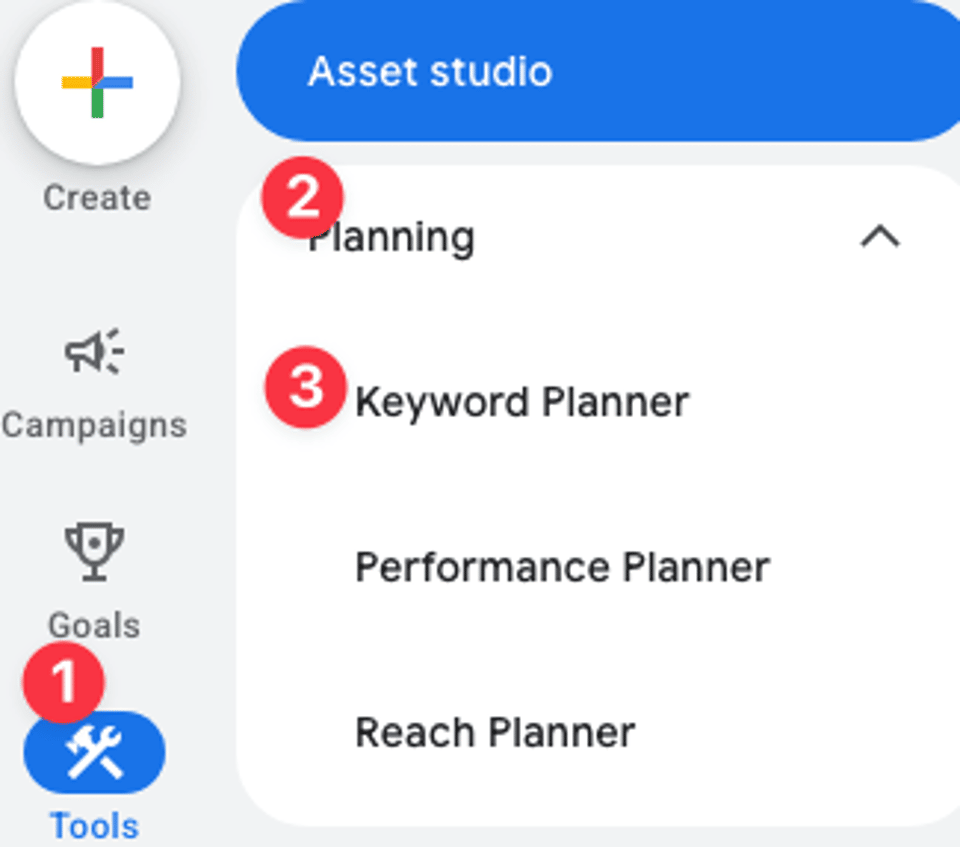
Go to Tools > Planning > Keyword Planner (Free and unlimited use)
Keywords Everywhere
Extension for Chrome and Firefox $7/month. Helps you measure traffic and competition for keywords.
https://keywordseverywhere.com/
Also Asked (see what people are asking)
1 Free search a Day or $12/month
Answer Socrates
3 searches a day
$15/month gets you 100 searches a month
Ubsersuggest
Shows key word competition and more. It's a suite of tools to help find keywords, and write articles.$29/month.$290 Lifetime (credits thanks to AI)
SERanking
A full suite of tools that helps you create content, competitor comparisons and more. $129/month
SEMRUSH
Consider by many people to be "THE" suite of SEO tools (especially finding tools that your competitor is not using, and you should). $139/month
Page Audit Chrome Extension
A chrome extension that shows all sorts of information about a page so you can then write a similar page that will rank better.
Two Tools Dedicated For Podcast SEO
While I'm not sure there is much difference between SEO and PSO, there two tools dedicated for podcasts.
PSO from Ausha
This tool has some nice features, but it also left me frustrated. If you give me seven days to test the tool, give me access to ALL OF IT. I mean every marketer knows that you give it to the customer and let them "get hooked" so when their trial is over they will purchase.
I couldn't do that as much of the tools spotlighted required me to upgrade. Boo.
That being said it does show how much a keyword is searched for (not as specific as some tools for web seo). It also shows you how hard to competition is.
Keep in mind that you need to give your dashboard 24 hours to show some statistics in your dashboard.
Ausha PSO (affiliate)
PodSEO
This is from Andrea De Marsi (Co-founder of Spreaker) and Francesco Baschieri (Co-founder of Spreaker) and it has a similar feature set to the ausha tool.
You can save 10% using the coupon schoolofpodcasting. (affiliate)
I thought it was very cool that Podseo alerted me to the mistake that I had accidentally listed my show twice in Spotify (I moved from Libsyn to Captivate - nuff said).
It has some cool episode planners, and is cheaper than Ausha PSO. Their AI tools looks at your episodes and recommend future ideas and then helps you plan them, and has a calendar showing when the episodes were released.
They also can send you daily updates on your rankings or your competition.
Check it out at podseo.com and use the coupon schoolofpodcasting to save 10%
Because of My Podcast: Paul Colligan
Paul is a huge theater nerd, and loves the musical Chess. There was a version that was awful, but never got to see it. Then he let a library in NYC know he was a podcaster. Then he got access to videos that the public hasn't seen - because he had a podcast. Check out Paul at https://podcastpartnership.com/
Other Items Mentioned
Turn AI Into Your Personal Podcast Analyst! on Buzzcast
SEO for People Who Don't Like SEO Podcast
Podpage - Websites for Podcasters
Captivate - AI Tools Help You Choose Episode Topics
Oura Ring - Body Measurement via a Ring
Just One Tip Podcast
Big Lash Interview on Last Week's Episode
This content may contain affiliate links, meaning I earn a small commission if you purchase through these links at no additional cost to you. I only recommend products or services I trust and believe will provide value to you. Thank you for your support!
Mentioned in this episode:
Question of the Month
One of our favorite questions, "What are your top podcasting pet peeves? You know the things that make you press fast forward, delete, or maybe even unfollow... share your frustration with these tactics along with a little bit about your show and your website (so I can add a link in the show notes). You can upload a pre-recorded version or press record on the website. I need your answer by March 27th, 2026
Want to Make Some Money with Your Podcast?
Pick up any book on podcast monetization, and you will find 90 percent of it only covers how to launch a podcast. If you already have a podcast, you have that information; you’re ready for the next step. Profit from Your Podcast provides top strategies and real-life examples of podcast monetization. This book is more than what to do. It also tells you how to do it. Go to www.profitfromyourpodcast.com/book
00:00 - The State of SEO and Now PSO?
02:10 - A Quick Correction
03:10 - Nancy Loved Last Week
03:42 - How to Test to See If You're in Google
05:40 - Put a Newsletter Sign Up on a Popular Page
06:49 - What Are the RIGHT Keywords?
07:12 - What Is Your Domain Authroity?
08:18 - Dave's WordPress SEO Nightmare
09:01 - Why Do I Need This?
09:25 - Singles Instead of Homeruns
11:00 - Heytony.ca
11:58 - School of Podcasting
12:36 - Free SEO Tools
14:24 - Keywords Everywhere
14:46 - Answer Socrate - WOW
15:44 - Ubersuggest
16:29 - SERanking - Pro Level
17:02 - The King: Semrush
19:00 - Answer The Public
19:56 - Also Asked
20:40 - Spying Extensions
22:10 - Show Notes vs Blog Posts
23:01 - What are Show Notes?
24:58 - Formatting Difference in Apps
26:58 - How Long Does it Need to Be To Rank?
28:55 - E.E.A.T
30:38 - Question of the Month
31:34 - SEO Tools Specifically For Podcasters
31:42 - PSO From Ausha Frustrating
37:38 - PodSEO
42:06 - Current SEO Tools
42:53 - Killer Robots
43:27 - Consistency and Time
44:00 - Podpage Autolink
45:19 - AI Results
45:30 - SEO Is Not Dead
46:31 - Why Clicks are Down
47:22 - You Never Known Who is Listening
48:26 - Because of My Podcast
51:29 - Breaking News From Fuure Dave
55:19 - Bloopers
Dave Jackson:
All right, the buzz phrase here is growing your show with keywords or search engine optimization, better known as SEO, which means E-E-A-T, so you can get a little AGI. And holy cow, Old MacDonald had a farm, E-I-E-I-O. Can you— I sound like Christopher Walken. E-I-E-I-O. Yeah, more cowbell. How— what does this mean? Because you can get a headache looking at this stuff, and it can help. And I looked at a lot of tools, watched a lot of YouTube, and I'm going to come up and tell you if you want to get into this, because here's the good news. Are you ready? It only takes more time.
Dave Jackson:
Yeah, that's all great, because I don't know about you, I got a ton of that laying around, just bored out of my gourd. Not— yeah, so we're going to talk about SEO. Is it dead? And some simple ways you can find the right keywords that not everybody's searching for. When I worked at Lipson, I remember a guy had started a podcast and it was something called like golf podcast. That's probably not it, but anyway, and he had been podcasting a good 3 weeks and wanted to know why he wasn't at the top of search engines when somebody typed in golf podcast. Yeah, that's not the way this works. We're gonna get into this to help you get found, 'cause they gotta find you to hear you. We also have a cool Because of My Podcast story, and I did a boo-boo last week and I'm gonna fix it.
Dave Jackson:
Hit it, ladies! The School of Podcasting with Dave Jackson. Podcasting since 2005, I am your personal podcast coach, Hall of Famer Dave Jackson. Thanking you so much for tuning in. If you're new to the show, this is where we tackle the technology, face your fears, and flatten the learning curve. The website schoolofpodcasting.com, the longest-running podcast about podcasting on the internet. And I'm going to start off— this is important— last week I had the fabulous Jana Marie from Big Lash Energy on the show. That was the good news. The bad news is I was talking about a producer who actually co-hosted an episode of Ask the Podcast Coach with me, Tim Wahlberg.
Dave Jackson:
And Tim originally had a show called Just the Tip, and I said, don't name your show that because when people search Just the Tip, yeah, they might get things that aren't exactly podcasting related. And Jaina said, hey, just a little FYI, nobody's, you know, hot under the collar, but just for the record, Tim Show is just one tip from your podcast performance coach. So Tim, if that ruffled your feathers, I don't think it did. Tim seems like he's a pretty nice guy, but it's not just the tip, it's just one tip. I will put a link to that as I did last week in the show notes, which will be schoolofpodcasting.com/1027. Also want to say thank you to Nancy because Nancy is from the Family Tree Food and Stories podcast. And she said, Dave, I think it was your best episode ever. It was done narrative style.
Dave Jackson:
If you haven't heard it, I'll put a link to that in the show notes again out at schoolofpodcasting.com/1027. And I'll also put a link to Nancy's show. If you like kind of trivia and you're a foodie, And you like stories, uh, check out her show again, Family Tree Food and Stories. But let's get to getting found. I am the head of podcasting at Podpage, which is a great tool. If you're tired of WordPress, uh, check out podpage.com-preview and see what your show would look like. You basically put it in, you pick your colors, you pick a layout. So whatever you see in those templates, you can really change.
Dave Jackson:
And I'm here to tell you, you can make a website, a great-looking website, in about 15 minutes. And so consequently, I am not an SEO, like I'm not a total SEO guru, but I work a lot in this space, so I'm learning more and more about search engine optimization. And we have to start at square one, and that is, are you in Google? Now, before we get into Apple and Spotify and all that, you should be in Google. 'Cause everybody uses Google and we'll get into the whole, but what about AI? Let's just, step one, are you in Google? There's an easy way to tell. Go to Google and in the search box type S-I-T-E, so site colon, and then no space, your website. So site:schoolofpodcasting.com and you'll see all the shows and all the links. And like, if anything shows up, You're in Google, but you want to have an account in what's called the Google Search Console. Why? Because it shows you what people are typing in to find your site.
Dave Jackson:
And for me, it's a lot of anchor, which is weird because I'm not a fan of Spotify. If you're new to the show, not a fan. Much better choices as a media host. Love them as a, as a music service, but not at all as a web host or a media host. And so I can see where people have typed in anchor reviews and then they find mine. So, but that's why I did that. And so the Google Search Console is a free tool that you can see, you know, what's coming to your site, where are they coming from, a lot of information about that. And like, I saw where one of my most indexed top viewed sites— well, what do you do there? You put a link or you embed a newsletter signup, and if it's about a certain topic, make a lead magnet for that topic.
Dave Jackson:
Now that sounds so duh, but it's— I've done it and I've seen my newsletter signups greatly increase. One, I have a page about how to take phone calls. Yes, taking phone calls. On a podcast. And on that page, because it was getting indexed a lot, I put, hey, would you like this information, because it's long, as a PDF? And people said yes, sure. They could have, you know, saved it in their browser, bookmarked it, all that, but they're like, I'll take the PDF so I can leave. And then I got their email, and then I can, you know, do all that email marketing stuff. So that is step 1.
Dave Jackson:
Are you in Google now? Let's get into keywords. And it's not just I need keywords, it's the right keywords. And so I kind of explained this in the opening. It's not just vomiting a bunch of words that people will hopefully, you know, search for on your site. It's getting the right keywords. So when you first start off, you don't have a lot of traffic there's this thing called your domain authority. I will put a link in the show notes for a free site that will show you your domain authority, because if you go out there and you're like, well, what's my domain authority? So I just went out and checked mine, and it is a 43, which a bunch of backlinks and things like that. So I went to our good friend Perplexity and said, hey, I got a 43, is that good? And it said from 1 to 20 is kind of when you are a new site with limited backlinks, uh, you have lots of room to grow.
Dave Jackson:
Uh, 20 to 30, you're starting to develop an authority. You're starting to build some links and traction. When you get 30 to 40, that's moderate. It's average authority. It's competitive on less difficult words. And when you get to 40 to 60, you're officially good. You have a strong authority for more established brands, capable of ranking for valuable More competitive words, when you get to 60 to 80, you're very strong authority, usually larger, very known, well sites with extensive quality backlinks. And then 80 to 100, you are in the top tier.
Dave Jackson:
Here's the really sad news. Ready for a story? I was around 87 for the longest time, and I switched my SEO tool, my WordPress plugin, from, I think it was Yoast to All-in-One SEO. Long story short, and it's not the plugin's fault, I accidentally clicked the button that said don't index my site in Google. So I just told you how to get into Google. I just told Google, nah, it's all right, I don't need you. Yeah, so to say my authority, my authority is on the rise, but yeah, for a good 5, 6 months, I just told Google, nah. So I strongly urge you not to do that. But why do I need to know my domain authority? Because you want to find keywords that are popular but something you can rank for.
Dave Jackson:
And in some of these tools, it will show you, hey, on a scale from 1 to 100, you're about, you know, this, this particular keyword is X amount of points to, you know, really try to rank for it. And what happens, we all want to hit that home run, right? I would love, I mean, I own the website, I think I own this one, How to Podcast, and that would be great. And I could use that, et cetera, and I could populate with all sorts of blogs and such, but a better strategy might be to find keywords that bring value. So what does that mean, Dave? You can go in and see more or less, this is kind of, many of these are estimated, and we'll talk about tools here and which ones are guessing and which ones are not. But you can see how many times people have searched for this. And this is where I looked at about 3 or 4 people who live and breathe and smell and poop SEO, and I got answers from you should go for at least 20 searches. I guess it's a month, I don't know, up to if you're small, 100, like anything below 100 searches. And what they're saying is you might be able to rank and get 20 more people to your site, or, you know, maybe 100 people to your site if you're the number one research thing.
Dave Jackson:
Now we'll get to AI in a minute because AI has really diminished people clicking on links to your site. But nonetheless, that's the goal. I can find keywords that I can actually rank for instead of trying to hit the home run. I'm going to hit 2 doubles and a single and maybe occasionally a triple. And there's a guy from heytony.ca. His name is Matt Diamante, and I just like him. He's funny, he's entertaining, and he comes up with great tips like this one. Matt, what's the sneakiest ChatGPT prompt you know?
Speaker B:
Okay, I've got a really good one. Go to ChatGPT. And type this in exactly. I'm writing a blog post about topic. Ask me any questions you would need to know to write the most complete information about this topic using my expertise, experience, opinions, and case studies. And all you have to do is answer those questions. ChatGPT will write you a really great piece of content that is more likely to rank than anything you're probably going to write. Bye.
Dave Jackson:
So when you know your domain authority, and again, I'll have a link to where you can click this, put in your website, and it'll analyze it. Once you know where that is, then you can kind of see, oh, maybe I shouldn't swing for the fences. Maybe I can score by just hitting a bunch of singles. And Matt calls that an SEO avalanche. Now we're going to get to tools in just a minute, but first I want to tell you about this. The School of Podcasting. And again, I watched a lot of videos. Some of these I actually used.
Dave Jackson:
It was a lot of fun, but a lot of work. And there is always that, well, it kind of depends, and kind of you get what you pay for. For example, and I have links to these again, schoolofpodcasting.com/1027. And you might be thinking, I hope these aren't a lot because I got no budget. Well, there was one— am I going to tell you? I'll put it here. It's from this company called WordStream. And if you want some really crappy keywords, yeah, use that one. It's free and you can use it as much as you want.
Dave Jackson:
But I'm just here to tell you I put in some, you know, keywords in the things it spit out. I went, yep, my audience would never type that. So a one that's actually good— the good news is it's good because it's from Google. The bad news is most of Google's stuff is not the best interface, and they give you in many cases way more information than you want. And this is the Google Keyword Planner. This used to be a thing And then they moved inside the Google AdSense dashboard. So you have to have a Google AdSense dashboard, and then you can go to Tools and you can go into Keyword Planner. What's nice about this is you can say, hey, my keyword is blah, and it'll say, oh, here's the estimated amount of people that are going to be looking for this, and here is the competition.
Dave Jackson:
And it'll say something like low, medium, or high. And what you're looking for are again things that have been searched for, and some people say more than 100 searches, and then some people say you can go down as low as 20. That's up to you, but you want it to where there's enough people looking at this keyword and then there's not a lot of competition. So that's one. When I looked at that, I was like, oh, this is cool. It's just You know, there's 37 million tools in this thing and I need that one. Now, one that's a little more easier is not actually a website, it's a Chrome extension. I think it also works in Firefox.
Dave Jackson:
It's called Keywords Everywhere, and this will again give you, hey, how many people are searching for this and what's the competition. It does a little more than that, and it starts about $7 a month. The one that I was like, hmm, this might be the winner, is a website called Answer. And I love Steve Martin. He made a joke once about Socrates, and he said this: But I am into the intellectual thing. I went to college, I studied the great philosophers, uh, Socrates. So anytime I see anything around the word Socrates, not so crates, I always think of Steve Martin, um, and this is called Answer Socrates, and you can use it 3 times a month for free, and then you can upgrade for $15 a month. And so I'm going to talk about some other tools here that help you kind of find what people are searching for.
Dave Jackson:
This one does that and a whole lot more. For if looking for bang for your buck, AnswerSocrates is the one you want to go with. Now there is one a little more that you'll hear a lot about called Ubersuggest, and it is $29 a month. They also have a lifetime deal. Now because it uses AI, you know, we're all about, oh, it's gotta have AI. It's Seinfeld. Seinfeld's doing— I don't know what's wrong with this, I need more AI. And, uh, yeah, because of that, you then have to buy credits even though you bought a lifetime thing, but it shows keyword competition.
Dave Jackson:
So here again, how hard is it going to be to rank for this? And that's kind of what you need. I'm going to talk about some specific SEO for podcasters, and they kind of show you that, but they kind of don't. And so now if you really want to start to get into the pro stuff, There is one that is $100 more a month, and all these are monthly fees. If you buy the yearly thing, it's cheaper, but it's called SE Ranking, and it's $129 for a full suite of SEO stuff. It's insane, all the stuff you can— you can spy on your competitors and see what keywords they're using and all sorts of stuff. That is SE Ranking, but for $139 a month, that in my book is a lot of money. And this is for people that are really serious about being found. That's, it's SEMrush.
Dave Jackson:
There's another one called Ahrefs, or A, it's Ahrefs, and that is somewhere in that ballpark. They're all already— there's another one called Hike that's $150 a month, but that one, again, it has AI. Look, it's got AI. To which I always say, remember, AI stands for always increases the price of whatever you just injected it to. So for me, looking in these, like, Semrush has a great feature where you say, hey, here's my competitor, here's me, find good keywords that are missing from my competitor. I was like, that's pretty cool. I might actually do the free trial just to use that feature on that. But that one, if you want to go Cadillac, Semrush, from the ones I saw, and I realize there are 50 million of these things, I'll talk about some more here in just a second.
Dave Jackson:
Semrush is one that looked like, yeah, if I had the budget for that. If you're not, if you're on a slow budget and you want to spend some time with this, again, Answer Socrates is $15 a month. That was the one that jumped out. I like that a little more than Ubersuggest. Ubersuggest has a little better kind of interface, but I think Answer Socrates does more. And you can go in again to your Google Search Console or your Google AdSense to see exactly what is the traffic. And some of these get a little misguided on their estimations, shall we say, but I'm just looking for what's the competition. They also in some cases tell you how much it would be if if you wanted to buy Google Ads for this.
Dave Jackson:
But there are two other tools I wanted to talk about before we get into a couple extensions here. And one is called Answer the Public. You get 3 free searches a month. If you wanna buy it, it's $20 a month. And it shows you what people are asking. And so you can go in and type in whatever your topic is. And it will spit out in a very frustrating format, a circle like a pie chart. So you have to kind of tilt your head to read it.
Dave Jackson:
Now you can export that as a CSV just to save your neck and see what people are searching. And so what you can do is basically use this maybe as episode ideas, and in some cases if you can combine them, so maybe you find a title in a question and then you see these other related questions, you could add those questions as well because they all are kind of under this umbrella of the first question. Now, if you want, if you run out of searches on Answer the Public, there's another one that does the exact same thing. It's called Also Asked. You get 1 free search a day. So when I say 3 free searches, that's not a month. If I said that, that was wrong. 3 free searches a day.
Dave Jackson:
Also Asked is one free search, but if you want to buy it, it's $12 a month. And for me, I get those, but I think you can get that from AnswerSocrates, or you could go over, get your 3 free searches, come up with what people are searching for, and then analyze those keywords in AnswerSocrates or whatever you want to do. Again, you could use the Google Keyword Planner. Those are that. Now there are a couple other things that you can do to spy on your competition, and one is an extension from my buddy Matt Diamante at heytony.ca, and it's creatively named Page Audit. And when you go to this, what it does is you can go to your competitor's page. Let's say you're trying to rank for a particular word. You can see what their title is, their description.
Dave Jackson:
You can see how many words there are, because the more words, if they're good words, that's better. How many links, how many, uh, you get into headings, and we're going to talk about headings in a bit. And you can get all this information. You can actually see what their headings are. You can see what keywords, if any, they are looking for. So there's that one, and then there's another one that is called a detail, and it is from the folks at, uh, Ahrefs.
Speaker B:
Ahrefs.
Dave Jackson:
I don't know how to say that. Ahrefs. And it kind of does the same thing. It does a little more, but in theory, if you just need one, you can go with the, uh, the audit one from Hey Tony. But they all give you information so you can see, hey, how come I'm not ranking? Oh, because this is where headings come into play. Headings on a website show Google and Bing and DuckDuckGo what the page is about. And this is where we have to talk about your show notes. And there are show notes and there are blogs.
Dave Jackson:
And going back to 2005, I've kind of said, I think it's just write a blog and put a player in the middle of it Voilà! Now the blog will drive traffic to Google when somebody finds that and Google says, hey, go check out Dave's site. They click on and they go, oh look, an audio player, and they click it and they sit there and listen. And so Google goes, that's weird, every time I send somebody to Dave's site, somebody's there for like 17 minutes. This must be really good stuff. That's one way. Or you could write show notes, sometimes called an episode description, that just simply helps someone understand this. This is my— like, what are show notes? What's an episode description? A, most of your audience is never going to look at this because they're looking at the title and they're going, hmm, is that for me? But there are new people always coming into podcasting, they see the title and they go, huh, I wonder if this is for me. And they look at the description and go, oh, that kind of looks like it.
Dave Jackson:
And then the other thing a, you know, episode description does is when the person says— I just heard someone today, I heard two people today that mentioned something, and I was like, oh, I bet they put a link in the show notes. And so someone mentioned their Oura ring, and I was like, oh, good for them, because I'm 90% sure Oura— which I have one, by the way, and yes, link in the show notes, even if there's not an affiliate program. But if there is an affiliate program, that's a chance that people go, oh, I want to be like you, I want one of them, their fancy rings, and they will buy it through your affiliate link and you can earn You know, Mountain Dew money through that. You get enough products, there's another Mountain Dew. Now you got a whole keg of Mountain Dew. So when you talk about something in your show that your audience might want, if something you mentioned has a website, it's a service to your audience to put a link to that thing in the show notes. Now that does mean that many times you have a paragraph that's, I don't know, 6 sentences and then 27 links. That's fine.
Dave Jackson:
And then that's where people like, okay, that's my stuff for Apple and Spotify, and realize no matter what you do— let's take a quick tangent for that. Oh no, here we go. It's time for a 10-second tangent. Dave's going to fly off on another subject that isn't really related to what we're talking about. 10-second my ass. Rubbish. Easy there, Nigel. Uh, it's, it's somewhat related when you're typing your show notes and you go, hey, these look different in Apple than they do in Pocket Cast, Overcast, Spotify.
Dave Jackson:
What? Yeah, I do my show notes, I bold stuff. And like, for example, the bolding in last week's episode, I had a bunch of tips from Jaina and I bolded the tip and then had a little description and the bolding only showed up in Pocket Cast. Both Apple and Spotify stripped out the bolding. I don't know why, I don't care, and I don't have time to worry about it. I do my show notes the way I want it. In theory, they should show up that way, and they don't. And who's got time to complain? It doesn't do any good anyway. Ugh, finally back to the show.
Dave Jackson:
And with Spotify searching the description per Ausha, which is an SEO tool I'm going to be talking about here in a second, if you have longer show notes, at least in Spotify, because Apple only searches the author tag— please don't put keywords there, they'll kick you out— the title of the episode, and the title of the show. But according to Asha, Spotify searches the description, so I can put more words in my, you know, show notes, my episode description. And also, because I'm now using Podpage, that then becomes part of my website, where before I might have done a smaller version of an episode description with all the links and enough to answer the question, should I listen to this? And then once it came into my website on Podpage, I would then add additional things. Well, now I've just got everything connected and it's automated. And if you want to, you can still write a longer post as a blog post on your website and link to your episode. That boosts your SEO as well. When I asked our good friends at Perplexity, How many words should a blog post have to catch the eye of Google? It said what I always said, which is at least 300 words. So now that is considered thin and it barely has enough context and keywords.
Dave Jackson:
Now that's from our good friends Yoast, the people that make that fabulous plugin for WordPress. It said for a focused SEO post, it should be somewhere between 1,400 and 2,000 words. That's a solid working range. That's from a website called Lovable. Now, they did say Google doesn't use a word count as a direct ranking factor, which I found surprising. That's from ROI website, and what it mentions here is it cares whether you fully satisfy the search content. They say longer posts tend to rank better mainly because they cover the topic more completely and naturally, earning more links and engagement, not because they hit an arbitrary number. So this is again where quantity over quality— it always, for me, it's always quality.
Dave Jackson:
Shoot for quality. And I always say Google doesn't just love words because everybody's like, I'm just gonna puke my transcript on there and I'll be at number 1 next week. No, Google likes good words. Google in the original days, back in the day, is the fact that in the days of Lycos and Hotbot, and there was one like Big Mama or something. I don't know, that sounds like you couldn't name it that anymore. But Google came along and it gave you good results quickly. Quality over quantity, and it took over, and now it's absolutely horrible. The front page is nothing but ads.
Dave Jackson:
But that brings us to our good friend EAT. I've mentioned this before, when you're doing your content, not just your show notes, this is what's going to set us apart from the robots. I have a clip about robots here in a second, but, uh, basically the E in E-E-A-T is experience, showing firsthand use or real-world involvement with the topic, better known as a story. Then you have expertise, demonstrating deep knowledge or skill, often via, you know, some sort of credentials or a strong track record, like award-winning Hall of Fame podcaster Dave Jackson. Uh, authoritativeness, being recognized as a go-to source, so mentions, links, reputation. So that comes in handy. And then trustworthiness, being accurate. What a concept.
Dave Jackson:
Don't lie to your audience. Being transparent. So when you make a boo-boo and being safe, so clear identity, sources, secure site, and honest content. Google uses this framework in its quality guidelines to decide which pages are more credible and helpful to rank. Now, if you look at that again, experience, expertise, authoritativeness, and trustworthiness. Trustworthiness. I don't think it's just Google that likes that. I think everybody likes that.
Dave Jackson:
So keep that in mind when you're trying to rank. Now, in a second, I'm going to talk about PodSEO and the SEO tool from OSHA. I believe that's how you say that— OSHA, OSHA, something like the people with the outrageous French accents. I'll talk about that in just a second.
Speaker B:
The School of Podcasting.
Dave Jackson:
All right, I want to talk about two tools that were made for podcasters, and the first one is called PSO, and I can't figure out how to pronounce her name. I'm going to say Asha, uh, and this is a podcast hosting company that also has this tool, and they're all about you can't, you know, don't be invisible, blah blah blah. And so I went over And it's not a bad tool, but I had a horrendous experience. And I feel bad for this because there are days when your software just doesn't work. As someone who works for a software company, you know, sometimes things show up or people find a really fun way to break your stuff. And so I signed up for the free thing and it's like, oh, we're going to send you, you know, the whole double authentication and that. And they never sent me the email. And I was like, okay, whatever, send me the link.
Dave Jackson:
You know, waited 5 minutes, waited, okay, send it again, nothing. Now that might be because I think I've been through their free trial, so maybe they're like, hey, sign in, in which case it should have said, hey, you've already used this email before. But anyway, I finally used a second email, got in, and the other thing that I was just like Wait, what is— I go in and it has all these fun tools that you can go in and it will show you where you rank and it can help you plan episodes and, uh, you can look at your competitors and all sorts of fun stuff. But when I was like, oh, wait a minute, what's this competitors thing? And it will rank your titles and stuff, but under show notes, it's like unlock full access to PSO Benchmark. Okay. And then I'm like, show artwork. Oh wait, it's going to talk about my artwork. Nope.
Dave Jackson:
It's going to say upgrade. This is a 7-day trial. How am I going to try it if you don't let me get access to anything? Uh, then I go into competitors and it shows me some stuff, which is interesting. And I, I can click on people, but it just shows me who my competitors are. And I'm like, okay, I see where Buzzsprout is a competitor and it's not the most intuitive thing. So I finally click on the 3 dots., and I see, okay, you know, there's, uh, all these people that are ranking, which was very handy, uh, but they— I went through their course, but the thing that just kept— like, I even right now, look, I, I did this 3 hours ago, and maybe you need 24 hours. You know what, let's give them some grace. You're going to need 24 hours to get some stats.
Dave Jackson:
And so I'm looking at my keywords, but here's the thing, the, the whole thing about You know, when I went into, um, just different parts of it— manage my keywords, was that another one? There were a few places where it was like, you gotta update. And I'm like, no, no, I don't want to update. It's, it's kind of like from a marketing company. Look, follow, follow the example of every drug dealer in America. The first one's free, baby. And you give them the good stuff and then you make them pay later. And I mean, at Podpage, when you do a 14-day trial, you get all the elite features. Why? Because we want you to be addicted to those.
Dave Jackson:
Everybody does this. And then you're like, hey, your trial's over. And they're like, oh, I really wanted the, you know, blah blah blah. And I was like, well, I can't do that here because I don't get to use half the features. And so for that, I go, what? So wasn't a great If you're gonna give me a free trial, give me a free trial where, I don't know, 20% of the features are like, nope, you gotta update. And I was like, then it's not a free trial, it's a free put your toe in the water kind of thing. It is $29. Now when we compare that to other things like AnswerSocrates, I'm still going to say Socrates.
Dave Jackson:
Ubersuggest, it's the same price as Ubersuggest.. And when I went in and looked, it's in the same part of where you can go into keywords when you can see them. And it will say, okay, this is— and again, and this is with all tools, not just this one— it will show you the search volume and the difficulty, which is what you're looking for, right? So as I look at grow your podcast, even though it's a very difficult word to try to rank for, which currently I will toot my own horn, I am number 1 according to this tool, uh, but there's really not that many people searching for that. So it's difficult, but it's not really that many people searching for it. And so where the phrase podcasting statistics, um, there's a 22 is what they're saying search volume. I'm assuming that's out of 100, and the difficulty is like if you want to rank for podcast statistics you got a good chance at it because that's what you're looking for— keywords that are not a lot, that have a decent amount of search volume. So for me, 20, that's something to think about with almost, you know, light difficulty. So that it does for $29.
Dave Jackson:
Um, I did notice that there are some features here which makes sense, it's marketing, but where you go in and they're slowly hinting you should host your show with us because they're actually primarily a media host, which I get. But I was kind of like, all right. And like, for instance, when I go to the feed, I can see my last episode and there's a button there that says copy to the workspace, and it then goes in and it shows me my actual, like,, the fact that I have a limit of 3,900 words in your description. And apparently I've gone over that. Yes, I've gone 4,309. So maybe not so many links in that. Um, it can generate a transcript. And again, all this stuff is probably for their hosting feature.
Dave Jackson:
Yes, because I can see here where I can set chapters and things like that. Um, I do have an affiliate link for them. But I feel bad. I think I just caught them on a bad day. But all this optimization stuff is for their hosting, and I don't want to move my host. I love me some Captivate. I love Buzzsprout, you know, Bluebear. I'm not really— so I get it, it's marketing.
Dave Jackson:
They're, they're gonna try to get you to switch over. So when I found a tool, and this was, uh, one of the guys involved is the former founder of Spreaker. I saw them, I believe, at National Religious Broadcasters, and no, it was, uh, Podfest. And the other guy is Andrea DeMarci, and these guys are really— it's very similar to the SEO tool in from Ausha. The interface is a little easier Uh, it's cheaper. It's $20 a month. Uh, you can use the coupon code POD10 and it kind of walks you through like, here's the next step you could do. And it does, again, if all you're looking for is, hey, where are my keywords? It can go in and you can develop what are your primary keywords and secondary keywords.
Dave Jackson:
And so I can see here where make money podcasting is a keyword, is a medium search volume and some competition. So kind of medium there. So depending on what you want— podcasting best practices, that's crowded as well as, uh, but it does have a fair amount of search. And this is where the key ingredient that we're missing is there's no number to assign. There's no, there's no domain authority for podcasts. You can go in and see where you rank. Um, Ausha has a tool called Pod Wars where you can go in and type in your keywords and see if you're in the top, you know, 50 or whatever. Uh, PodSEO has the same thing, and now they just introduced some planning tools which I think are also involved in Ausha.
Dave Jackson:
So they're interesting, they're good, and if you just want to stick to, you know, podcasting, you can go in, both of them show you the charts. So I can see that Joe Rogan is number one again, and Crime Junkie and Pod Save America and all that stuff. So you can track yourself on that. But for me, I thought about it and I was like, wait a minute, what's going to be the difference from someone searching on Google for a podcast versus someone searching in an app? Aren't they going to kind of be searching the same thing? And I realize there are categories, and I believe it was Asha that said 24% of people search for podcasts using categories. And I'm like, really? That seems high. Everybody I know just goes to the search button and starts typing in words.. And so I thought, you can find keywords that work on the web, and call me crazy, I bet they might work good in an app. Now that's an opinion, but I think a good keyword is a good keyword.
Dave Jackson:
I don't know that people search on the web any different than they would in an app, and you can get a little more detail from websites in terms of like, well, how many actual searches are there from things like the Google tool in their AdSense, their, their keyword tool there. So it's not that PodSEO and Ausha are bad. In fact, I have an account at PodSEO because I'm still playing with it. And but I can see when I can come to the conclusion that there's really no difference because it's the same game again. It's find a keyword that has enough people looking for it but not a ton of traffic. That is the name of the game. And I'm not sold that keywords in podcast apps are any different than keywords in Google, in which case you could spend the money on an SEO tool for the web and probably get a decent tool that you could use in a podcast app. Now, like I said, both PodSEO and Ausha, I see now, are introducing kind of planning tools and things like that.
Dave Jackson:
So in that essence, they are a little more, you know, podcasting related. They're trying to set themselves apart from the other SEO tools. Captivate— I don't understand. Wow. Okay. And then Alexa chimed in. Captivate already has some SEO tools. Buzzsprout already has some SEO tools where they'll actually write your show notes and things like that.
Dave Jackson:
Captivate has that. Uh, there was a great— I'll put a link to the show notes— Buzzsprout just did an episode on using like ChatGPT to do analytics of your show, find out what's the most popular, try to spot trends. That was interesting. This is already existing in Captivate. If you go into episode planning, there's an add episode idea and it looks at your stats So it knows what's working and what's not and suggests a bunch of ideas. And I got to tell you, these weren't bad. So AI is not always bad. It's not always going to take over the world.
Dave Jackson:
But I did hear this in an episode and it made me think. If you just take those headlines and the timing of it and say, okay, OpenAI has basically agreed to let the government use their technology to build, quote, autonomous lethal weapons. Fast forward a week, the person in charge of robotics at OpenAI resigns, citing safety issues. I'm gonna leave that there. Yeah, that is from a show called SEO for People Who Don't Like SEO by Meredith's husband. Yeah, I heard that, was like, what? So the other thing we need to talk about before we get out of here is the fact that this takes time. You can't put keywords in and then expect to be number one overnight. In fact, I bought years ago the lifetime access to Ubersuggest, and I'm constantly logging in, and it's like— because it'll go out and kind of do an audit of your site, and it's like, hey, we quit doing an audit of your site because you haven't logged in for 6 weeks.
Dave Jackson:
So you need to keep up on this stuff. Constantly researching. The good news is, since we're talking about keywords, you can put these into Podpage and it will auto-link that keyword. So let's say I put the phrase Glenn Hebert— maybe the keyword for the episode was my buddy Glenn Hebert over at the Horse Radio Network. Anywhere else I had the phrase Glenn Hebert, it would link to that one page, because you really only want one keyword for that one page. Otherwise, when Google sees that keyword on multiple pages, it might get confused as to which one to go to on your site. Now, in the end, if it's door number 1, door number 2, or door number 3, who cares? Google's still coming to your site. But that is something I heard again as I was doing some research on this.
Dave Jackson:
And that can be hard because sometimes your keyword is, well, broadcasting, and you're like, well Well, does that mean I can't write another thing about podcasting? Well, it might be better. And that's where tools like, you know, Answer Socrates can give you additional words, not just your one keyword to put on your website. Another thing you can do is again, get these phrases because AI is not looking at podcasts. It's not looking at golf. It's looking at specific sentences, specific questions., and that's where you can find that. And that is something that I am not educated on right now, which is how to get AI to mention you. That might be another episode in the future, but I do know this, that SEO is not going away. A lot of people like, oh, it's the end of SEO.
Dave Jackson:
Well, of course it is, cuz that's gonna make it click. But for that, I will say they just came out with another report from Edison Research And radio in the car is still number one. Now, podcasting had a great report. Everything was up, and the age group that is really latching on to podcasting right now are boomers, people over 50. I always say, man, don't turn your back on a boomer. They can probably out-ChatGPT you in many cases. But they mentioned that AM radio, FM radio in the car is still number one. And yes, technology is moving very, very fast, but there are still VCRs, there are still DVD players, right? We don't just drop everything and move to another thing.
Dave Jackson:
So even if SEO is starting to lose some of its juice, and what it's losing is people no longer have to go to your site to get the answer. You know, Copilot or whatever Google is doing you type in a question and it will, it will give you the answer from your website without sending them to your website, which is kind of— yeah, thanks guys. So that's down, and the one report I looked at, it was down by like 10%. I, for me, I don't use Google a lot. I'm a big Perplexity guy, and when I go to Google, I rarely have to click on somebody's website. So that's the tricky part, which leaves us again our good friend word of mouth.. And word of mouth is not based on the microphone, it's not based on the web design, it is based on the content. And by that I mean the content.
Dave Jackson:
And if you didn't hear me the first time, it's the content. So I, I started off the show talking about that mistake with the Big Lash Energy. She just did episode 200 plus 1, so congratulations to Jaina on that. And she had her audience send in messages. And I sent one in. Scott from What Was That Like sent one in. A bunch of other people. Oh, speaking of that, you never know who's listening.
Dave Jackson:
I've said that before. This is a show for women about living strong and independent, and the first people that sent in congratulations on episode 200 were men. Yeah, so you never know who's listening. Keep that in mind., and, uh, she did her 200th episode and there were people that were talking about how her message has saved their life. It's inspired them to try new things and to get out of bad relationships. And she is a huge Because of My Podcast story. She's just walking and living. And speaking of that, here's a fun Because of My Podcast story from my buddy Paul Culligan, who it turns out is a theater nerd.
Speaker C:
Welcome to Because of My Podcast, where we spotlight the results people are achieving because of their podcast. Well, Dave, we're going to get into some, uh, well, theater nerd stuff here. Hooray! Um, they say that the album that is the most important to you is the one that you imprinted on when you were 14. And when I was 14, the album that I imprinted on was an album called Chess. It was a concept album for a musical. It was the guys from ABBA mixed with the guy who wrote the lyrics for Jesus Christ Superstar. And it spawned a bunch of music that you've heard. You probably know the song One Night in Bangkok.
Speaker C:
Still one of my favorite albums of all time. 2 years later, I saw the version of it in London, loved it, and printed on it. There we go. '88, I head to college and I hear that they're doing Chess in America, which is great, and I want to hear about it. And so I follow it. I buy the cast album for that. It's terrible. I read the reviews for it.
Speaker C:
They're all terrible. And the thing lasted on Broadway for 39 days or performances or something like that. Just terrible. But I've always been curious, like, was it as bad as I thought it was? Well, last week I went to New York to see the, um, the reboot of Chess. They changed a lot of things and I was fourth row. So you saw the spit, saw everything. But here's the about my podcast part. The New York City Library has an archive of almost every single Broadway show ever that's been taped.
Paul Colligan
These shows have been taped, not necessarily released to the audience, not out of the wild, not necessarily released to normal people. It's, it's really more of an archives kind of thing, but you can submit the proper paperwork to get permission to watch the recording. And I thought, how fun would this be to see if I could leverage myself as a podcaster and see if I could get that archival tape. And the day before I see, you know, the revival 40 years later if I can get access to it. And I did. It was a beautiful day, went in, showed my stuff, filled out the forms, got everything cleared, got my New York City library card even though I live in Oregon, and I was able to go into the archives. I was able to, you know, put the headset on and I was able to watch it. Now, it was terrible.
Paul Colligan
It was terrible. It should have closed in 10 performances, not the 30 or whatever it was. But I got to see why it was so terrible. Answered a lot of questions. As a chess nerd, it was fun. For the general public, it wasn't. But, you know, the guy at the front desk was like, ah, so you're a podcaster, huh? And that was what I used to get access. And it was fun.
Paul Colligan
And it wouldn't have happened without me being a podcaster. And I enjoyed it. And again, I enjoyed the performance of Broadway. Maybe a bunch of us will go see it in September when we do the next podcast move. But anyway, Dave, another thing my podcast let me do.
Dave Jackson:
Thought I'd let you know. Talk to you later, buddy. Thank you, Paul. I think his last one, he got to hang out with Rob Halford from Judas Priest, Alice Cooper, and I think Ace Frehley from KISS. I know lots of people have got to interview people, got access to all sorts of stuff because you're considered press. Now, if you want to start your podcast, there's only one place you really need to go, and that is schoolofpodcasting.com. Get access to the coaching with me, the community with all sorts of great insights as well, and of course the step-by-step courses, and it comes with a 30-day money-back guarantee. Website, schoolofpodcasting.com.
Dave Jackson:
Use the coupon code listener. And until next week, take care. God bless. Class is dismissed. If you like the show, please share it with a friend. If you like the show, pretty pretty, please share it with a friend right now. That's from ROI website. And it says it cares whether you're furly.
Dave Jackson:
You're furly? Yeah, if you're really cold, you're furly. Well, there you go, kids. That's how the bloopers start. They don't, and who's got time to complain? It don't do no matter anyway. What does that mean? What, don't do no matter? There should be a link in the show notes. It's a service. It's a service? What is that? Nobody likes it. Charlie in the Box.
Dave Jackson:
Wow, I've turned into Peter Brady, and half of you don't know who Peter Brady is.